On this page
The power is out, the radio is the only voice in the room, and a dipole antenna calculator turns a frequency into the length of wire that dipole needs. Enter the frequency you want to use, read the length, and build the dipole to that length. The gear below covers the rest of the job: a receiver with a dipole kit, a mount that turns mobile antennas into a dipole, a balun that matches the feed, and a whip bundle for wideband listening.
SolarKitHQ earns a commission when you buy through links on this page, at no extra cost to you. As an Amazon Associate I earn from qualifying purchases. Affiliate disclosure.
The quick answer
A dipole antenna calculator takes the frequency you plan to use and returns the total length of wire for a dipole cut for it. Split that length across the 2 legs and feed it at the center, through a balun or a mount that suits the antenna. The receiver kit below tunes from 500 kHz to 1.7 GHz, and the balun kits work from 1 to 30 MHz, so match the result to gear that covers your frequency.
Step 1: Pick the frequency
Start with the frequency you want to listen to, since the calculator needs it first. The RTL-SDR kit tunes from 500 kHz to 1.7 GHz, with HF reception below 24 MHz in direct sampling mode. The balun kits work from 1 to 30 MHz. Pick one frequency to cut for, since a dipole is cut for the frequency you enter.
Step 2: Get the length from the calculator
Enter the frequency and read the total length it returns for a dipole. Split the total across the 2 legs and measure each leg from the center feed point. The calculator gives a length for the frequency you entered, so a new frequency means a new length.
Step 3: Match the feed with a balun or a mount
The feed is where the calculator length meets the radio. A 1:1 balun suits a dipole antenna from 40 to 100 Ohms, the 1:4 balun suits loop antennas from 200 to 400 Ohms, and the 1:9 balun suits long-line antennas. The Procomm mount (on Amazon) joins 2 mobile antennas with 3/8-24 thread into a vertical or horizontal dipole, and it fits mast pipes up to 1-3/8 inch diameter. See the best antennas for HF radio for the HF range.
Step 4: Listen with a receiver and antenna
With the dipole cut and fed, the receiver does the listening. The RTL-SDR kit pairs its dongle with a portable VHF and UHF dipole antenna kit, tuning from 500 kHz to 1.7 GHz. The dongle is RX only, so it receives and does not transmit. For wideband listening without a dipole, the RaTLSnake bundle offers 3 masts on a 2m RG-58 cable. See the best dipole antennas for ready-made options.
Dipole antenna calculator gear
The gear below handles the steps above: the receiver kit for listening, the mount and balun kit for building and feeding the dipole, and the whip bundle for wideband reception.
| # | Product | Solar Score | Buy |
|---|---|---|---|
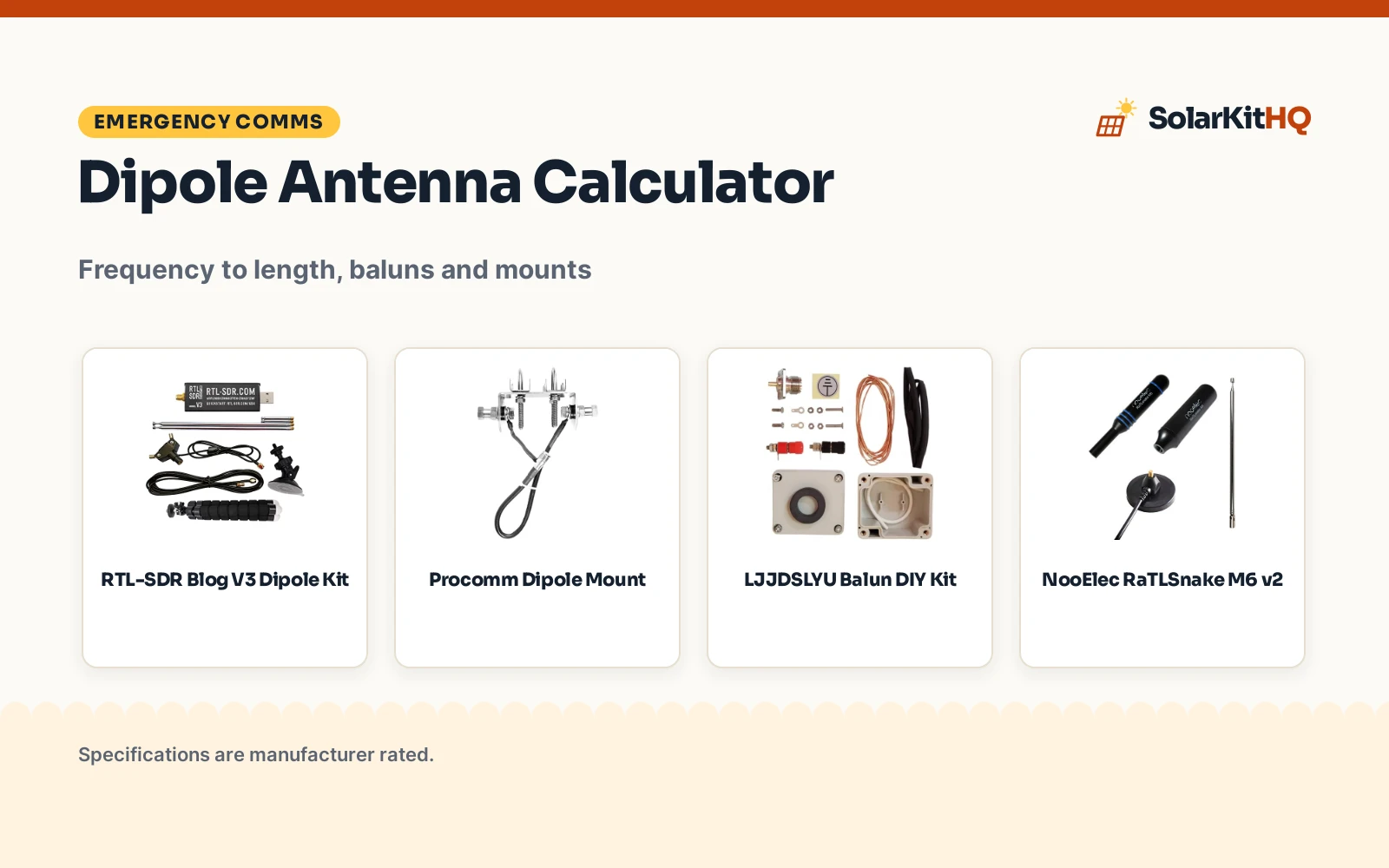
| 1 | 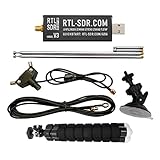 RTL-SDR Blog V3 Dipole Kit | 9.7/10 | Buy on Amazon |
| 2 | 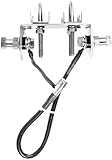 Procomm Dipole Mount | 9.6/10 | Buy on Amazon |
| 3 |  LJJDSLYU Balun DIY Kit | 9.6/10 | Buy on Amazon |
| 4 | 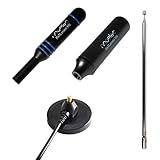 NooElec RaTLSnake M6 v2 | 9.5/10 | Buy on Amazon |

RTL-SDR Blog V3 Dipole Kit
A software defined radio with a portable VHF and UHF dipole antenna kit, tuning from 500 kHz to 1.7 GHz.
Pros
- Dipole antenna kit included with the receiver
- Tunes from 500 kHz to 1.7 GHz
- 1 PPM TCXO and R860 tuner
- 2 years warranty on manufacturing defects
Cons
- RX only, so it receives but does not transmit
- HF reception below 24 MHz works in direct sampling mode with reduced performance
- Not for use outside in poor weather conditions
- Portable and temporary, not a fixed outdoor antenna
Detailed Review
This kit handles the listening step: it receives the signal the calculated dipole is built for. The RTL-SDR Blog V3 pairs an R860 tuner dongle with a portable VHF and UHF dipole antenna kit. It tunes from 500 kHz to 1.7 GHz with 3.2 MHz of instantaneous bandwidth, 2.4 MHz stable, and a 1 PPM TCXO. The dongle has an SMA F connector, an aluminum shielded case with a thermal pad, and an activatable bias tee. The maker gives 2 notes on HF reception, direct sampling below 24 MHz with reduced performance and a note that the kit is not suitable for HF reception; check before ordering. The kit carries a 2 years warranty on manufacturing defects, and the dongles are RX only.
Who it's for: listeners who want a receiver and a dipole kit in one box to hear VHF and UHF. Who should skip it: anyone who needs to transmit, or HF reception as the main use.
Its Solar Score of 9.7/10 comes from performance 32/35, build 22/25, value 21/25, safety 7/10 and warranty 3/5: 85 of 100 points, placed on our 9.2 to 9.8 scale.
Key Specifications
| Tune range | 500 kHz to 1.7 GHz |
|---|---|
| Bandwidth | 3.2 MHz peak, 2.4 MHz stable |
| Oscillator | 1 PPM TCXO |
| Warranty | 2 years on manufacturing defects |
Taken from the seller's listing on 25 November 2026. Capacity and output figures are rated by the manufacturer.
Safety and Warranty
What this listing states. Aluminum shielded case with a thermal pad for passive cooling, so safety scores 7 of 10. 2 years warranty on manufacturing defects. It does not say everything a buyer needs, such as who pays return shipping, so warranty scores 3 of 5. See How We Pick.
Follow the manual. Connect and use the product as the maker describes, stay within every stated rating, and read the manual before first use.
This is general buying information, not professional advice. Follow each product manual and local rules, and see our Safety Disclaimer.
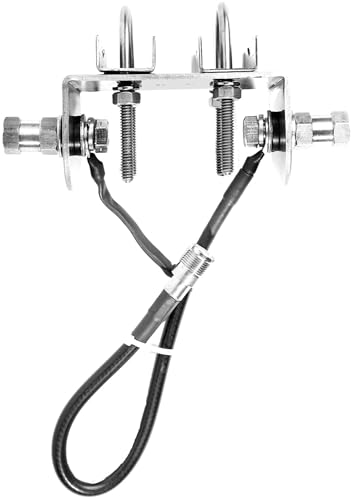
Procomm Dipole Mount
A 10 gauge stainless steel mount that turns 2 mobile antennas into a vertical or horizontal dipole.
Pros
- Creates a dipole from any 2 mobile antennas with 3/8-24 thread
- 10 gauge stainless steel with all stainless mounting hardware
- Heavy duty coaxial cable pigtail that accepts PL-259 connector cables
- Fits mast pipes up to 1-3/8 inch diameter
Cons
- Mobile antennas are optional and not included
- No warranty term is stated
- Adds 1.2 pounds to the mast before the antennas go on
- The finished dipole depends on the 2 mobile antennas you choose
Detailed Review
The Procomm mount handles the build step: it turns 2 mobile antennas into a dipole of the calculated length. Made in U.S.A from 10 gauge stainless steel with all stainless mounting hardware, it creates a vertical or horizontal loaded dipole base antenna from any 2 optional 3/8-24 thread mobile antennas. It includes a heavy duty coaxial cable pigtail for PL-259 connector cables, and it fits mast pipes up to 1-3/8 inch diameter. It weighs 1.2 pounds and suits HF antenna projects, CB, shortwave and more.
Who it's for: builders who already own 2 mobile antennas and want a dipole mount for a mast. Who should skip it: anyone who wants a complete antenna in the box, since the mobile antennas are optional.
Its Solar Score of 9.6/10 comes from performance 30/35, build 22/25, value 20/25, safety 7/10 and warranty 0/5: 79 of 100 points, placed on our 9.2 to 9.8 scale.
Key Specifications
| Material | 10 gauge stainless steel |
|---|---|
| Thread | 3/8-24 mobile antennas |
| Mast fit | Up to 1-3/8 in diameter |
| Weight | 1.2 lb |
Taken from the seller's listing on 25 November 2026. Capacity and output figures are rated by the manufacturer.
Safety and Warranty
What this listing states. Heavy duty 10 gauge stainless steel mount with all stainless mounting hardware, so safety scores 7 of 10. No warranty term, so warranty scores zero. See How We Pick.
Follow the manual. Connect and use the product as the maker describes, stay within every stated rating, and read the manual before first use.
This is general buying information, not professional advice. Follow each product manual and local rules, and see our Safety Disclaimer.

LJJDSLYU Balun DIY Kit
A DIY balun kit for 1 to 30 MHz with 1:1, 1:4 and 1:9 ratios, including a 1:1 balun for dipole antennas.
Pros
- 1:1 balun suits dipole antennas from 40 to 100 Ohms
- 1:4 and 1:9 ratios cover loop and long-line antennas
- Works from 1 to 30 MHz
- Withstands 100W to 200W
Cons
- A DIY kit, so it needs assembly
- No warranty term is stated
- The 1:9 ratio suits long-line antennas, not dipoles
- Covers 1 to 30 MHz only, so it does not cover VHF or UHF
Detailed Review
The balun kit handles the feed step: it matches the dipole to the radio. It works from 1 to 30 MHz, and the 1:1 balun suits dipole antennas from 40 to 100 Ohms. The 1:4 balun suits loop antennas from 200 to 400 Ohms, and the 1:9 balun suits long-line antennas. It can withstand 100W to 200W, and the kit comes with instructions. The kit measures 4.2 by 3.2 by 1.2 inches.
Who it's for: builders who wind their own feed for a dipole in the 1 to 30 MHz range. Who should skip it: anyone who wants a finished balun with no assembly, or a balun for VHF and UHF.
Its Solar Score of 9.6/10 comes from performance 29/35, build 21/25, value 20/25, safety 7/10 and warranty 0/5: 77 of 100 points, placed on our 9.2 to 9.8 scale.
Key Specifications
| Range | 1-30 MHz |
|---|---|
| Ratios | 1:1, 1:4, 1:9 |
| Power | 100W-200W |
| Size | 4.2 x 3.2 x 1.2 in |
Taken from the seller's listing on 25 November 2026. Capacity and output figures are rated by the manufacturer.
Safety and Warranty
What this listing states. Rated to withstand 100W to 200W, so safety scores 7 of 10. No warranty term, so warranty scores zero. See How We Pick.
Follow the manual. Connect and use the product as the maker describes, stay within every stated rating, and read the manual before first use.
This is general buying information, not professional advice. Follow each product manual and local rules, and see our Safety Disclaimer.
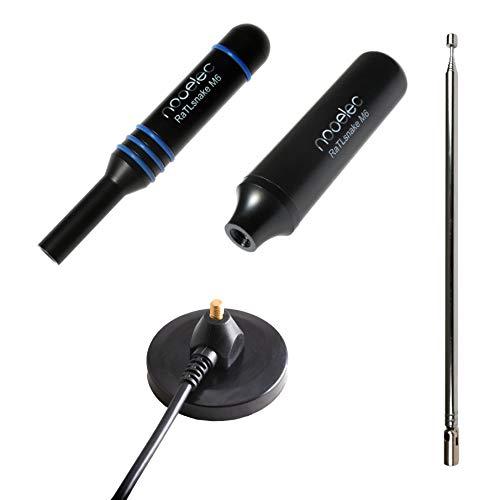
NooElec RaTLSnake M6 v2
A 3-antenna whip bundle with a 2m RG-58 cable for wideband reception on 50 Ohm SMA radios.
Pros
- 3 antenna masts for wideband reception: helical, DVB-T2 and telescopic
- Long 2m cable made with low-loss RG-58
- Magnetic base of heavy-gauge metal
- Redesigned for 50 Ohm to reduce SWR mismatches
Cons
- Fits only radios with a 50 Ohm SMA input
- A whip bundle, not a dipole kit
- The cable is 2m long, so the antenna stays close to the radio
- Built for wideband reception, not for one tuned band
Detailed Review
The RaTLSnake bundle handles the receiving antenna for a software defined radio. It includes an antenna base and 3 antenna masts, helical, DVB-T2 and telescopic, for wideband reception. The 2m cable is made with low-loss RG-58, and the male SMA connector fits 50 Ohm SMA-input radios such as the NESDR SMArt series and HackRF One. The base is redesigned for 50 Ohm to reduce SWR mismatches and improve ground plane coupling and shielding, and it is built from heavy-gauge metal. It includes 1 year of support and service direct from NooElec.
Who it's for: listeners who want 3 masts to swap on one SMA radio for wideband reception. Who should skip it: anyone who wants a dipole, since these are whip antennas, or a radio without a 50 Ohm SMA input.
Its Solar Score of 9.5/10 comes from performance 28/35, build 21/25, value 20/25, safety 6/10 and warranty 0/5: 75 of 100 points, placed on our 9.2 to 9.8 scale.
Key Specifications
| Masts | 3: helical, DVB-T2, telescopic |
|---|---|
| Cable | 2m RG-58, 50 Ohm SMA |
| Base | Heavy-gauge metal |
| Support | 1 year support and service |
Taken from the seller's listing on 25 November 2026. Capacity and output figures are rated by the manufacturer.
Safety and Warranty
What this listing states. Redesigned base for improved ground plane coupling and shielding, so safety scores 6 of 10. No warranty term, so warranty scores zero. See How We Pick.
Follow the manual. Connect and use the product as the maker describes, stay within every stated rating, and read the manual before first use.
This is general buying information, not professional advice. Follow each product manual and local rules, and see our Safety Disclaimer.
As an Amazon Associate I earn from qualifying purchases.
FAQ: power away from the grid
What does a dipole antenna calculator do?
It turns a frequency into the total length of wire for a dipole cut for that frequency. Enter the frequency, read the length, and split it across the 2 legs.
Which balun suits a dipole antenna?
The 1:1 balun suits a dipole antenna from 40 to 100 Ohms. The 1:4 balun suits loop antennas from 200 to 400 Ohms, and the 1:9 balun suits long-line antennas.
Can the RTL-SDR kit transmit?
No. The dongles are RX only, so the kit receives and does not transmit. It tunes from 500 kHz to 1.7 GHz for receiving.
What frequency range does the RTL-SDR kit cover?
It tunes from 500 kHz to 1.7 GHz, with up to 3.2 MHz of instantaneous bandwidth and 2.4 MHz stable. HF reception below 24 MHz works in direct sampling mode with reduced performance.
How do you mount a dipole from mobile antennas?
The Procomm mount joins 2 mobile antennas with 3/8-24 thread into a vertical or horizontal dipole. It fits mast pipes up to 1-3/8 inch diameter and includes a heavy duty coaxial cable pigtail for PL-259 connector cables.
Related solar guides
See the best dipole antennas, the dipole vs vertical antenna guide, the best antennas for HF radio and the best shortwave radios for reception. See every emergency radios and communication guide and all emergency prep guides.