DC to DC Chargers
Best Dc to Dc Charger for Suv (2026): 5 Picks Compared
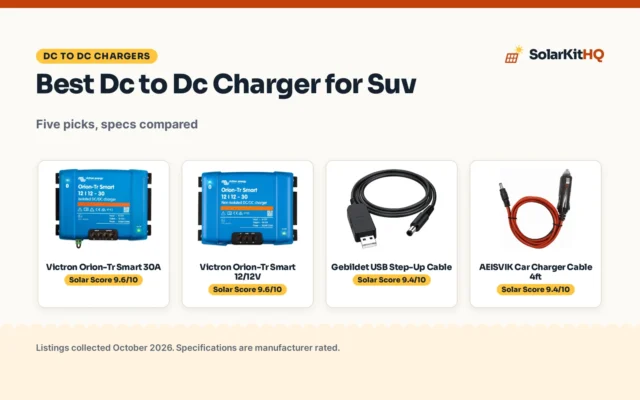
A 30A isolated DC to DC charger leads this SUV dual battery roundup, joined by a step-up cable and socket cords compared on stated…
DC to DC battery chargers for RVs, vans and trucks compared by charge amps, supported chemistries, built-in solar input, ignition sensing and protections.
A 30A isolated DC to DC charger leads this SUV dual battery roundup, joined by a step-up cable and socket cords compared on stated…
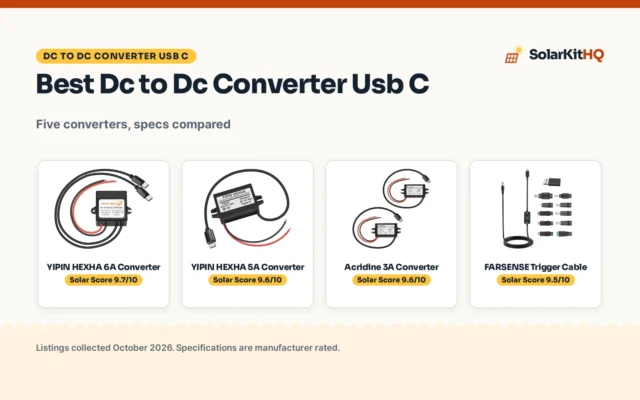
Five USB-C converters compared on output current, input range, protection lists and stated figures, from a 3A single-port module to a dual-port 6A unit.
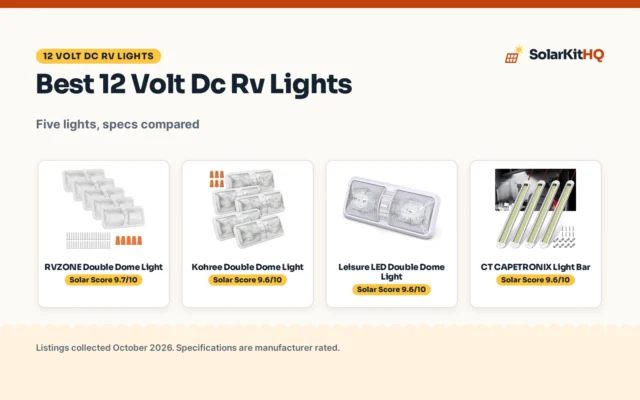
Five 12 volt DC RV lights compared on lumens, color temperature, switch control, pack count and warranty, with dome fixtures and a light bar.
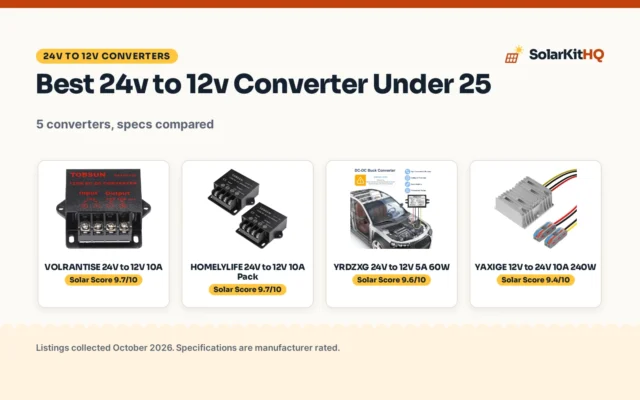
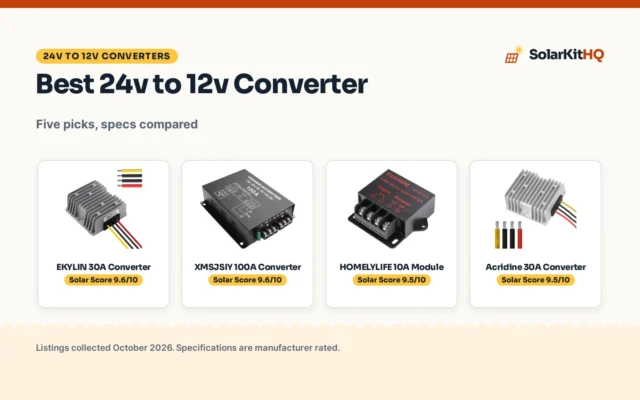
5 24V to 12V converters compared on current, input range, protections and warranty terms, with every figure taken from the listings.
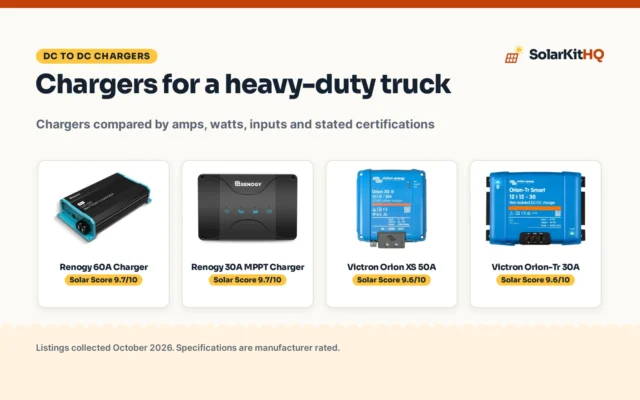
Chargers for dual battery charging in a heavy-duty truck, compared by amps, watts, inputs and stated certifications, from Victron and Renogy listings.
Five 24V to 12V converters compared by output current, input range, protection set, sealing code and warranty, from a 10A mini module to a…
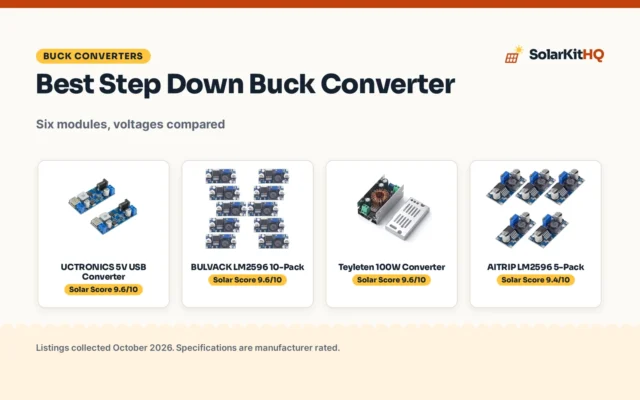
Six buck converter modules compared by input and output voltage, current, size and stated safety listings, for stepping down DC power.
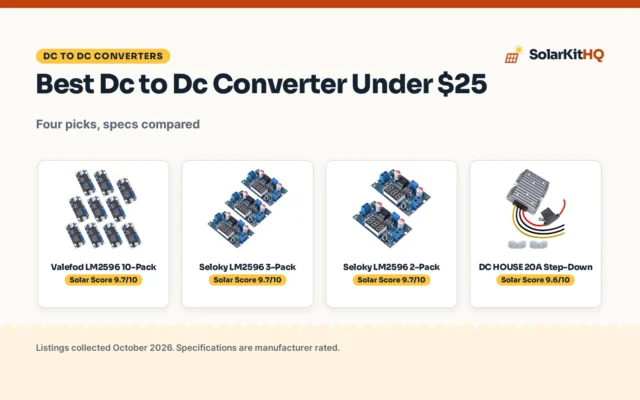
Four DC to DC step-down converters compared on input and output voltage, current, protections and warranty terms, with every figure taken from the listings.
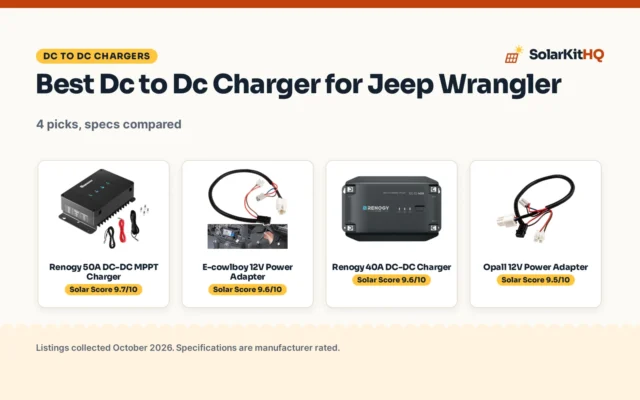
Two ignition-switched 12V harness adapters and two title-only Renogy DC-DC chargers compared on stated specs, fitment, protections and warranty for Jeep Wrangler owners.
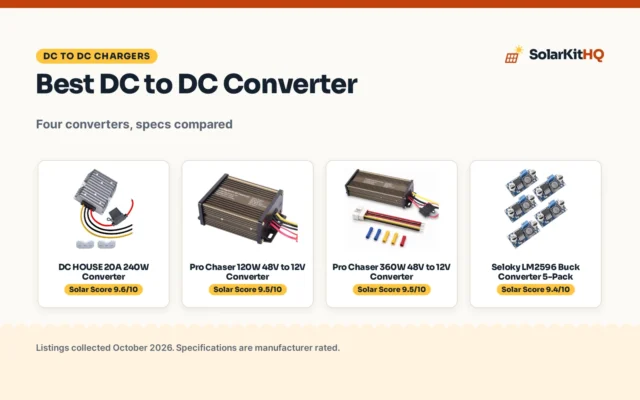
Four DC to DC converters compared on stated input and output, current, efficiency, protections and warranty terms, with every figure taken from the listings.
These chargers pull power from an alternator or other DC source into a second battery. Compare the electrical limits before the case or brand.
Check the vehicle side first. The alternator's rating and the cable run from the starter battery limit what any charger can deliver, so a high-amp unit is not always the better pick.