Portable Solar Panels
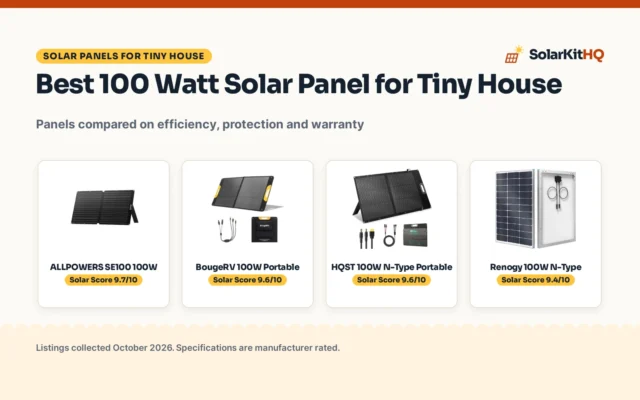
Best 100 Watt Solar Panel for Tiny House (2026)
Foldable 100W panels and title-only N-Type panels compared on efficiency, protection code, folded size, connectors and warranty for a tiny house roof.
Portable folding solar panels compared by rated watts, open circuit voltage, output connectors, folded size, weight, kickstands and stated weather rating.
Foldable 100W panels and title-only N-Type panels compared on efficiency, protection code, folded size, connectors and warranty for a tiny house roof.
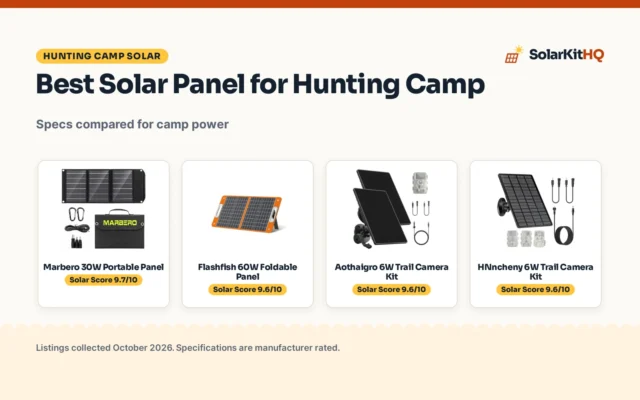
The best solar panel for hunting camp ranges from a 60W foldable panel to small trail camera pairs, compared here on watts, battery capacity,…
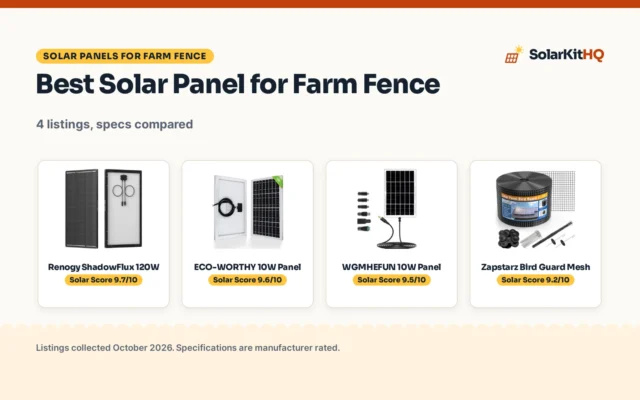
Solar panels for farm fence compared on watts, voltage, size, weather codes and mounting detail, with a guard mesh in the group marked as…
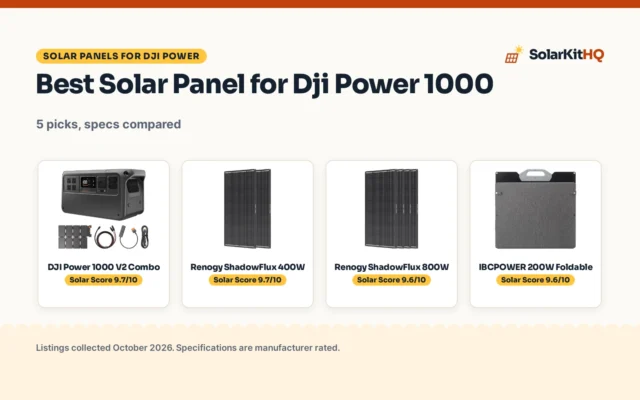
5 picks compared by stated watts, form, weather rating, DJI fit and warranty term, from a 100W foldable panel to an 800W rigid set.
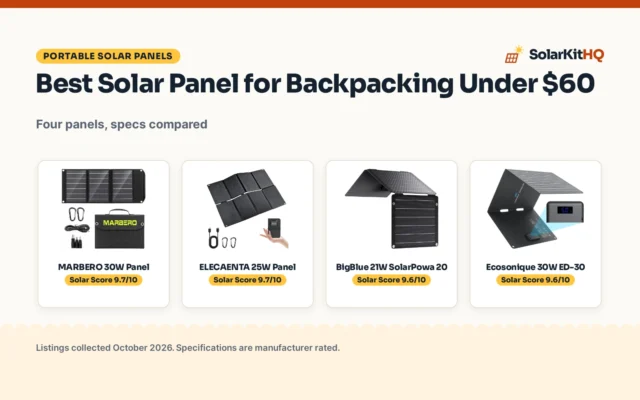
Four foldable solar panels for backpacking compared by watts, weight, USB output, weather rating and warranty, using only stated listing specs.
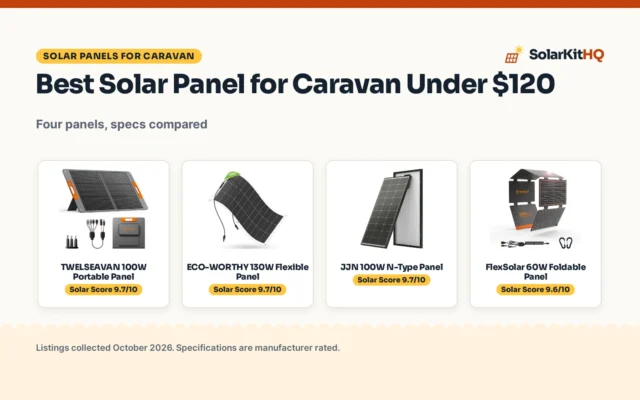
Four caravan solar panels compared on watts, efficiency, form and weather protection, from a foldable 60W set to a flexible 130W sheet.
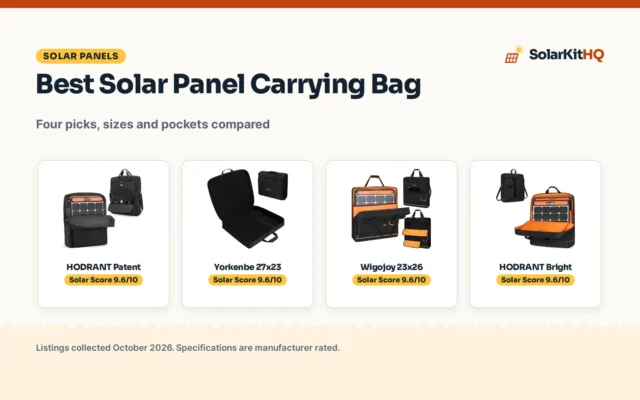
Four solar panel carrying bags for two foldable panels, compared on size, pockets, carry options, material and warranty term.
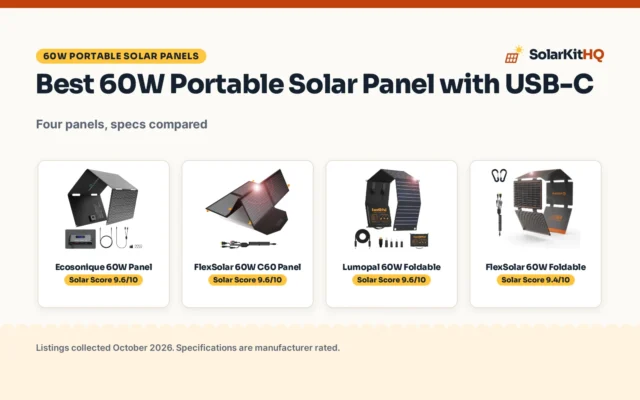
Best 60w portable solar panel with usb c: a smart display panel, a multi-port panel and two title-only panels compared on USB-C output, weight,…
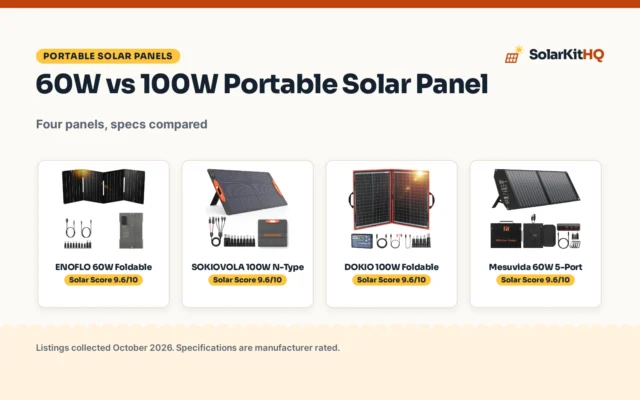
Two 60W and two 100W portable solar panels compared on weight, efficiency, connectors and warranty, every figure taken from the listings.
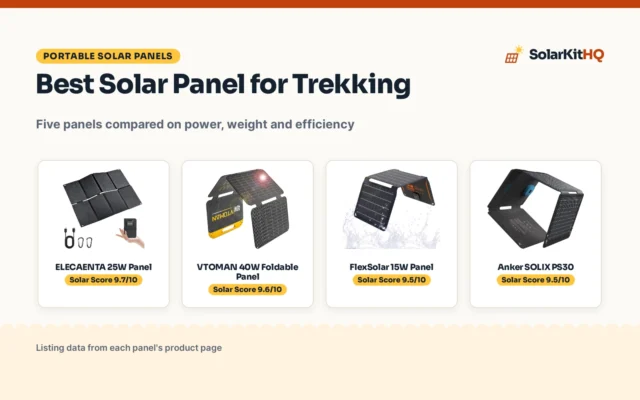
Five portable solar panels for trekking compared on watts per gram, conversion efficiency and weather rating, from a 40W folder to a 396g 20W…
Portable panels trade size for convenience, so the label figures matter more than the product photos. Read these points on the listing before comparing anything else.
Write down your device's maximum solar input and its plug type before browsing. Those two facts remove most mismatched options at once, and the listing for any panel should let you confirm both without guessing.