Charge Controllers
Mppt vs Pwm for Rv: Which One Should You Buy?
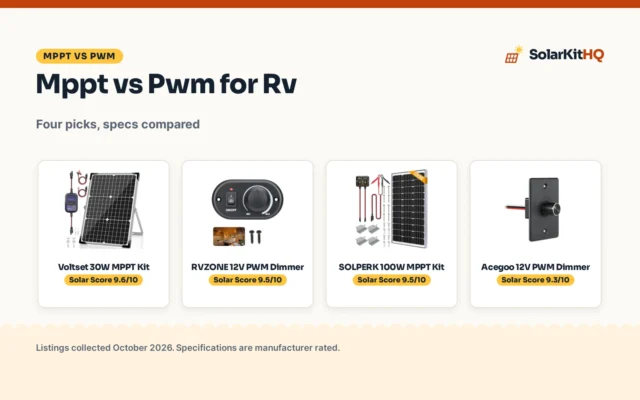
Mppt vs pwm for rv compared: MPPT charger kits for topping off a 12V battery, and PWM dimmer switches for cabin lights, on stated…
MPPT and PWM solar charge controllers compared by charge current, maximum PV input voltage, supported battery types, display or app and stated protections.
Mppt vs pwm for rv compared: MPPT charger kits for topping off a 12V battery, and PWM dimmer switches for cabin lights, on stated…
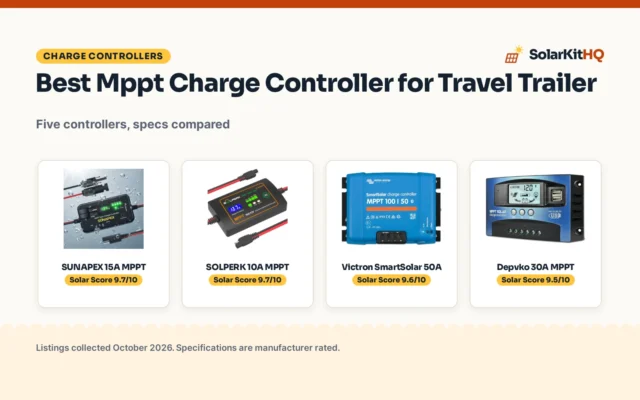
Five MPPT and PWM charge controllers for travel trailers compared on current, panel range, battery compatibility, stated protections and weather codes.
A 50A UL1741 MPPT controller leads this charging roundup, joined by a 20A app-controlled controller and title-only options compared on stated current, voltage and…
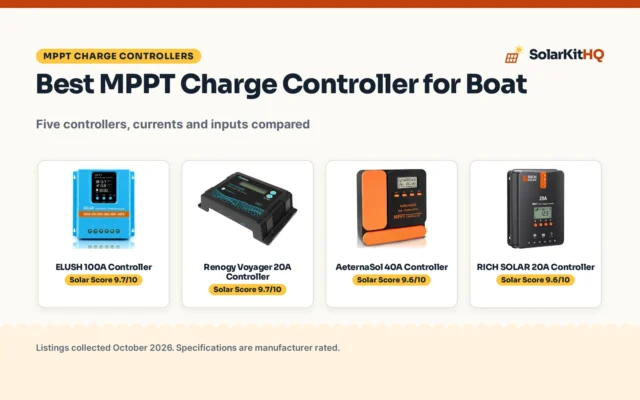
Five MPPT charge controllers for boats compared on current, system voltage, PV input, display and protection, from 10A to 100A.
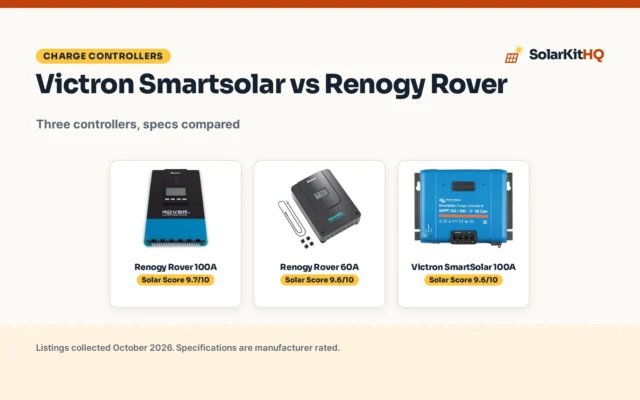
Three MPPT charge controllers head to head: the Victron SmartSolar against two Renogy Rovers, compared on current, protections, monitoring and warranty.
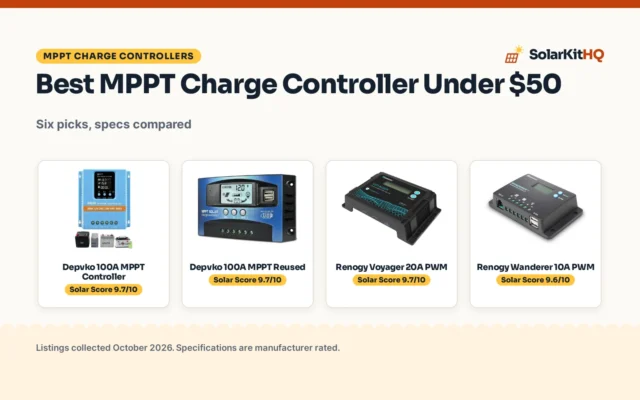
Six MPPT charge controller picks under $50 for small solar setups, compared on stated current, voltages, battery types and warranty terms.
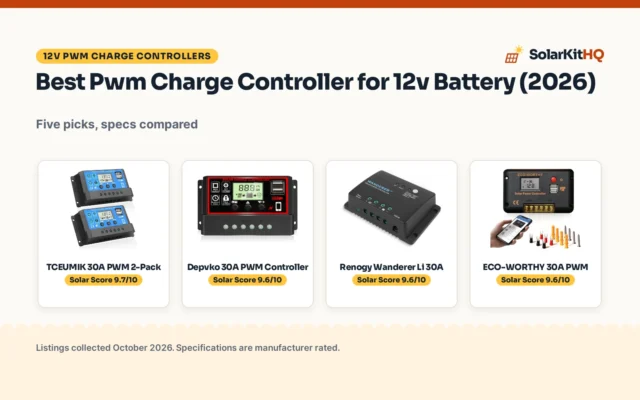
Five PWM charge controllers for 12V batteries, compared by rated current, system voltage, battery compatibility and protections, each scored from the numbers the listings…
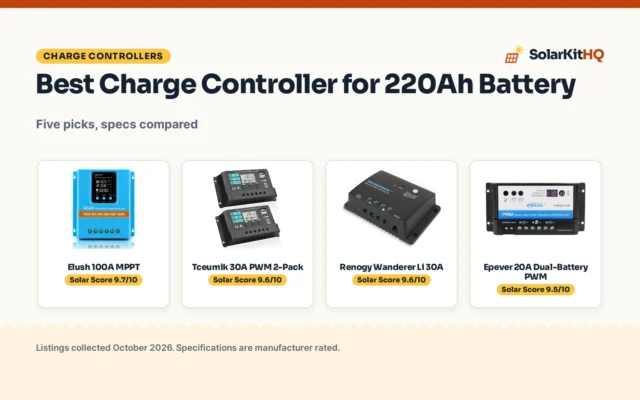
Five solar charge controllers for a 220Ah battery compared on amps, PWM or MPPT type, battery voltage range and protection features, from what the…
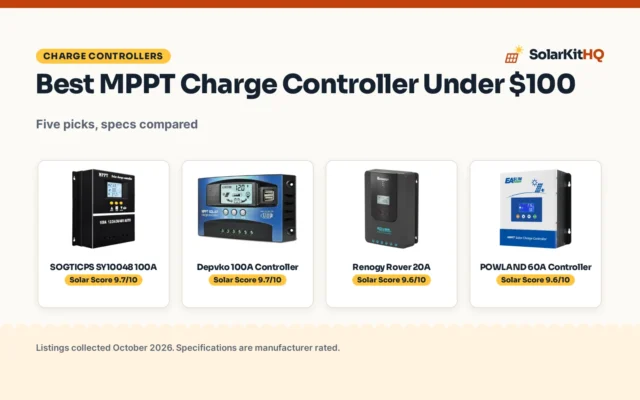
Five MPPT charge controllers compared on stated amps, battery volts, max PV input, protections and warranty, with every figure taken from the listings.
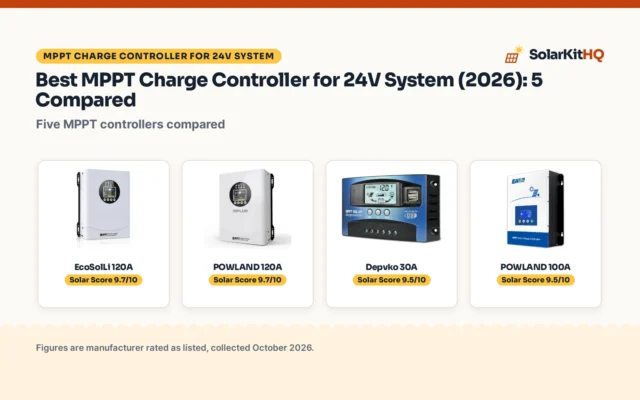
Best MPPT charge controller for 24V system: five MPPT controllers compared on current, PV input, efficiency and warranty, with a 120A pick and a…
The controller sits between panels and battery, so a wrong match shows up fast. Start with its limits rather than its features.
Write down the panel string's open-circuit voltage and the battery's chemistry, then eliminate controllers that fail either one. What remains is a short list that you can sort by amp rating and display features.