Inverter Chargers
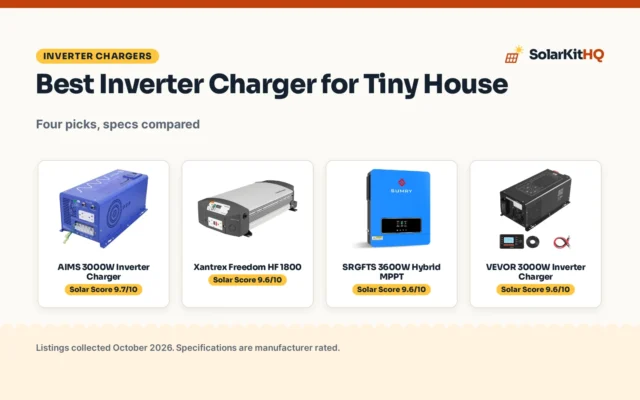
Best Inverter Charger for Tiny House (2026): 4 Compared by Spec
Four inverter chargers for tiny house use compared on stated inverter watts, charger amps, transfer features, marks and warranty terms.
Inverter chargers and all-in-one solar inverters compared by continuous watts, charger amps, built-in MPPT input, transfer function and stated protections.
Four inverter chargers for tiny house use compared on stated inverter watts, charger amps, transfer features, marks and warranty terms.
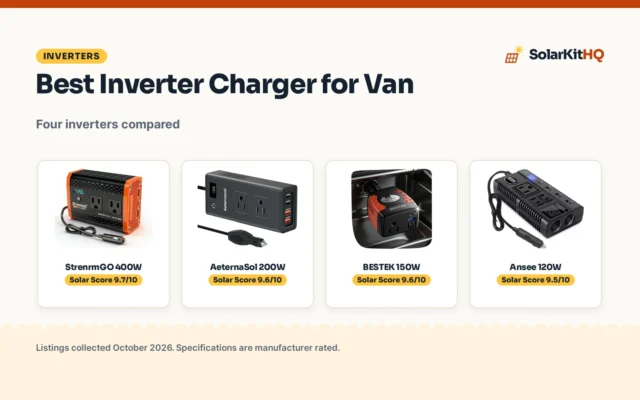
Four inverter chargers for vans compared on output, outlets, display, safety and warranty, with every figure taken from the listings.
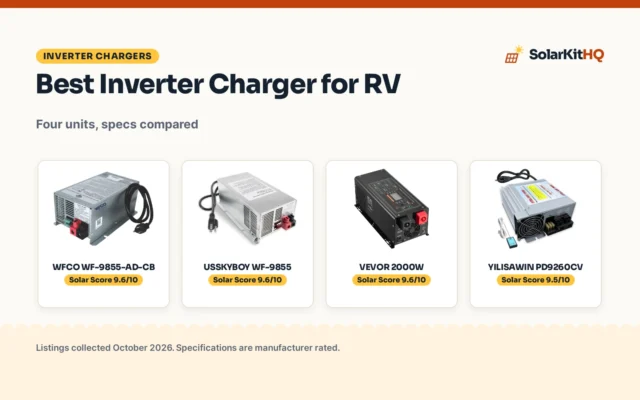
Four inverter chargers and converters for RVs compared by charge rate, input and output, protections and warranty terms.
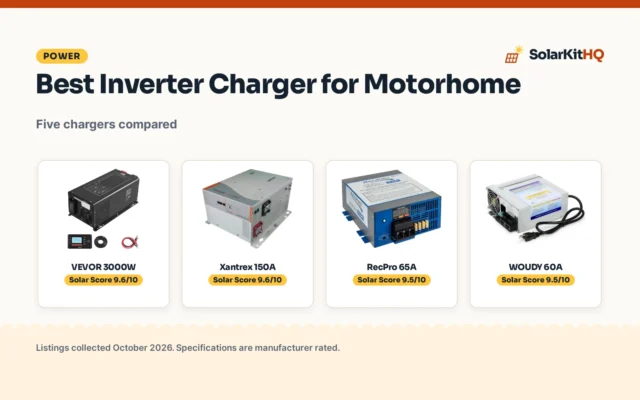
Five inverter chargers for motorhomes compared: amps, watts and warranty ranked for motorhome power.
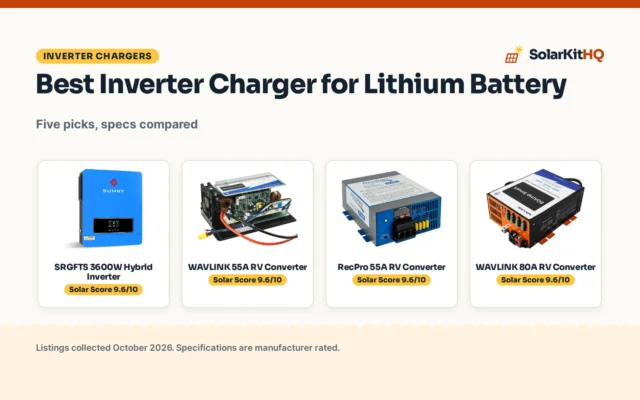
Five inverter chargers and RV power converters that state lithium support, compared on output watts, charge current, stated protections and warranty terms.
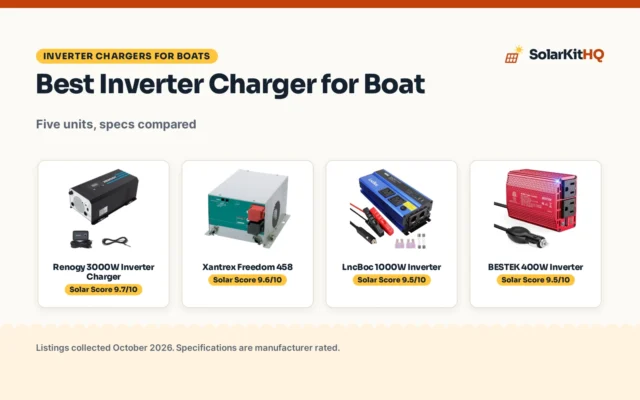
Five 12V inverter chargers for boats, from 300W plug-in inverters to a 3000W pure sine wave inverter charger, compared on stated output, charging and…
An inverter charger combines AC output and battery charging in one box, so the two halves of the spec sheet carry equal weight.
Treat the unit as two products in one. If the inverter half fits but the charger half is too slow or lacks your chemistry, a separate charger may serve better, and the listings say how each half performs. Confirm that the listed continuous watts, charger amps and battery profiles all describe the same mode of operation.