LiFePO4 Batteries
Best 200ah Lithium Battery for Shed (2026)
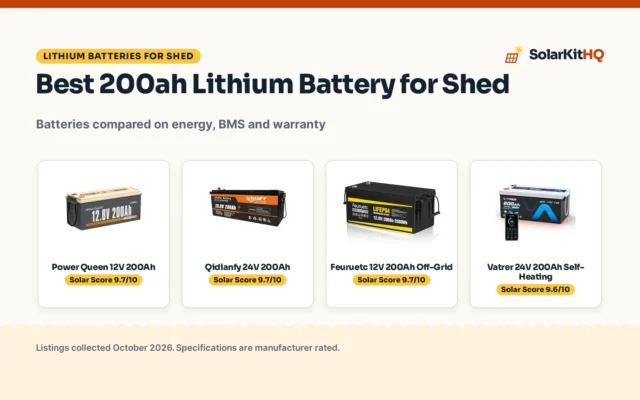
Five 200Ah LiFePO4 batteries for a shed compared on energy, BMS protections, cycle claims, cold weather behavior and warranty terms, with 12V and 24V…
LiFePO4 lithium batteries compared by voltage, amp-hours, stated cycle life, BMS current limit, low temperature protection, weight, size and warranty terms.
Five 200Ah LiFePO4 batteries for a shed compared on energy, BMS protections, cycle claims, cold weather behavior and warranty terms, with 12V and 24V…
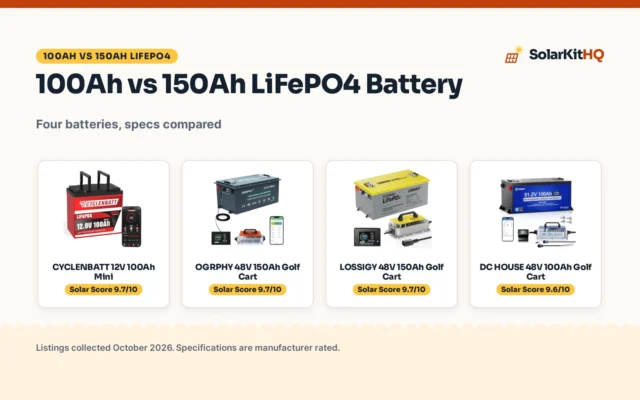
100Ah and 150Ah LiFePO4 batteries compared on capacity, voltage, BMS figures, peak current, weight, monitoring and warranty terms from four listings.
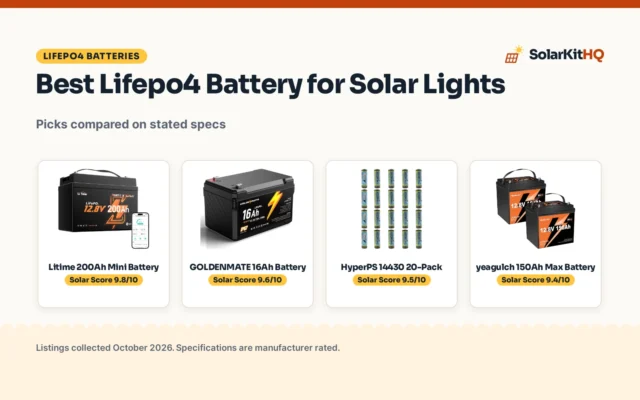
LiFePO4 batteries for solar lights compared on cell size, voltage, capacity, BMS protection and stated warranty terms for garden and path lights.
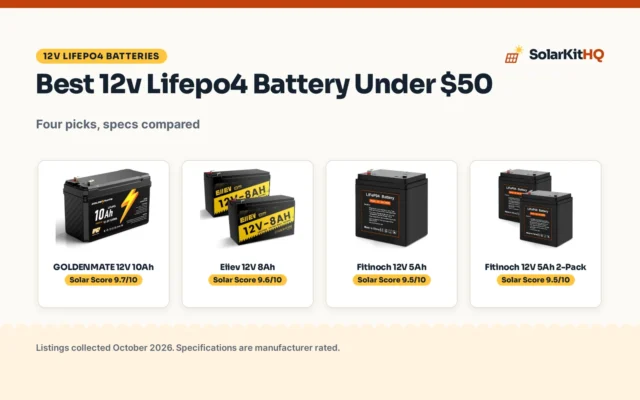
Four 12V LiFePO4 batteries compared by capacity, BMS rating, cycle life, weather rating and warranty, from 10Ah packs to a small 5Ah pack.
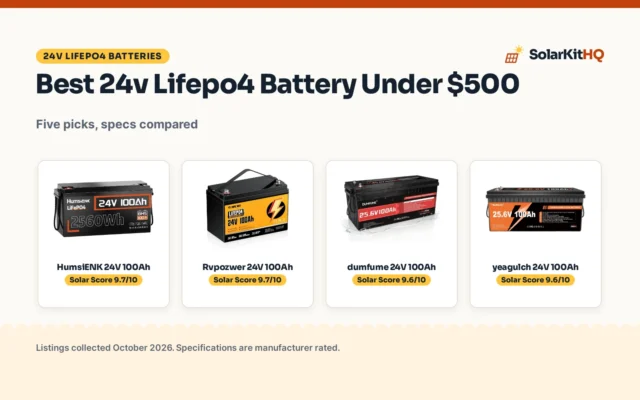
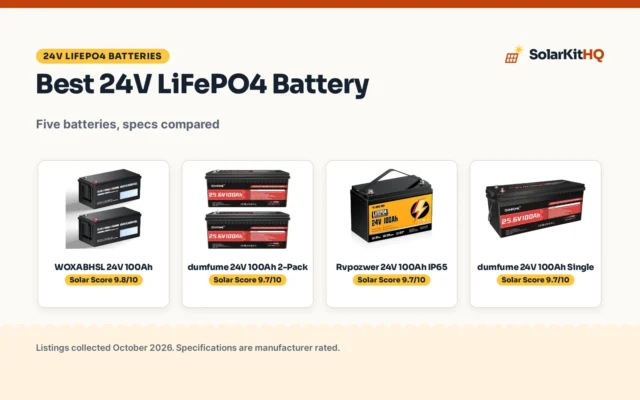
Five 24V LiFePO4 batteries compared by capacity, energy, BMS rating, cycle life, weather rating and warranty, from 100Ah banks to a small pack with…
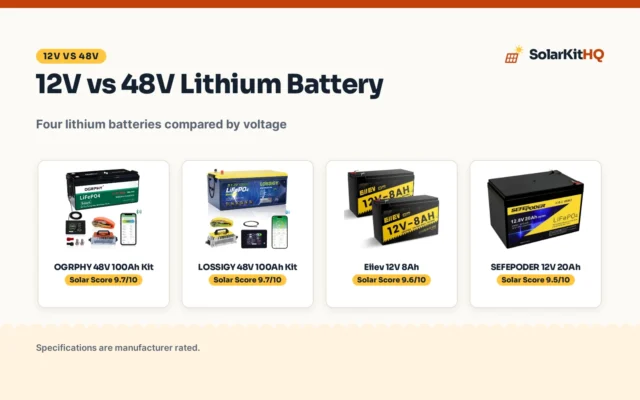
12v vs 48v lithium battery compared: two 48V 100Ah kits and two 12V LiFePO4 batteries, ranked on stated capacity, BMS figures, cycle claims, weight…
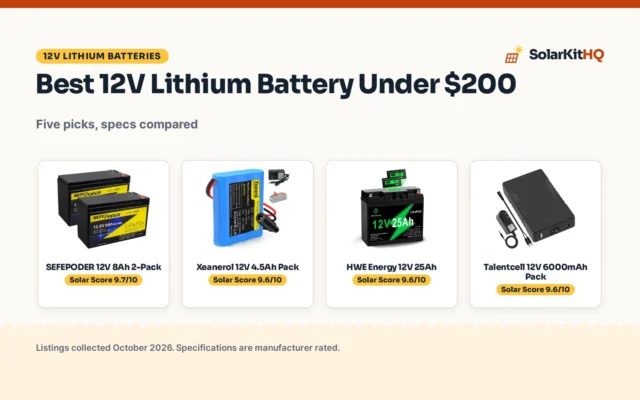
Five 12V lithium batteries under $200 compared by stated amp-hours, BMS protection, cycle life, warranty terms and the extras each listing includes.
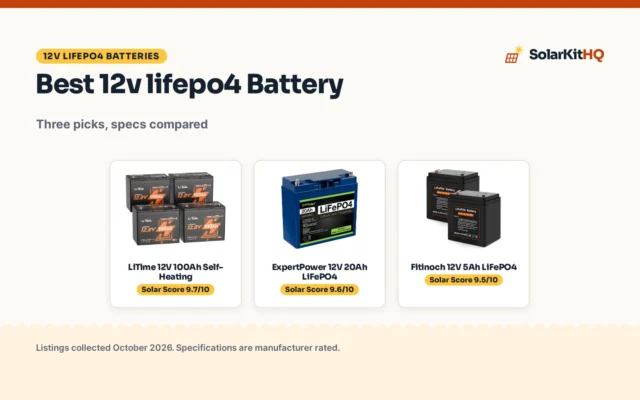
Three 12V LiFePO4 batteries compared on stated capacity, cycle life, BMS protection and warranty terms, with every figure taken from the listings.
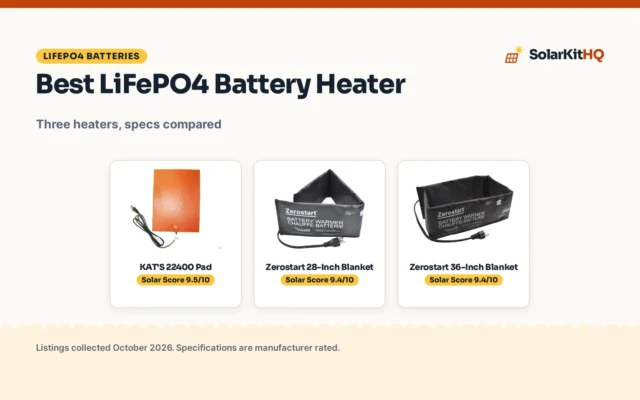
Three battery heaters compared on stated power, size, certification and warranty terms, with every figure taken from the listings.
Five 24V LiFePO4 batteries compared on capacity, BMS, monitoring, stated cycles and warranty terms, with every figure from the listings.
LiFePO4 cells are popular for deep cycling, but the packs differ in protection and capacity. The listing text holds the details that count.
Before buying, note your largest load's amps and your charger's supported chemistry. A battery whose BMS rating covers that load and whose charger profile exists in your gear is the safe starting point. Keep the manufacturer's stated limits in view, and treat cycle counts as ratings under set conditions rather than guarantees.