Rigid and Flexible Panels
Best Solar Panel for Barn Roof (2026): 5 Picks Compared
Two solar panels and three mounting kits for barn roofs compared on stated watts, efficiency, size, roof fit and warranty terms, with a bifacial…
Rigid, flexible and bifacial solar panels compared by rated watts, cell type, voltage, dimensions, weight, frame or flexible mounting and stated warranties.
Two solar panels and three mounting kits for barn roofs compared on stated watts, efficiency, size, roof fit and warranty terms, with a bifacial…
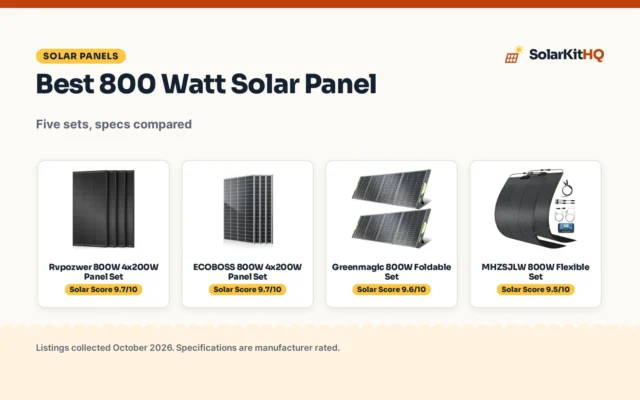
Five 800 watt solar panel sets compared by efficiency, weather rating and warranty, from rigid four-panel sets to foldable and flexible pairs.
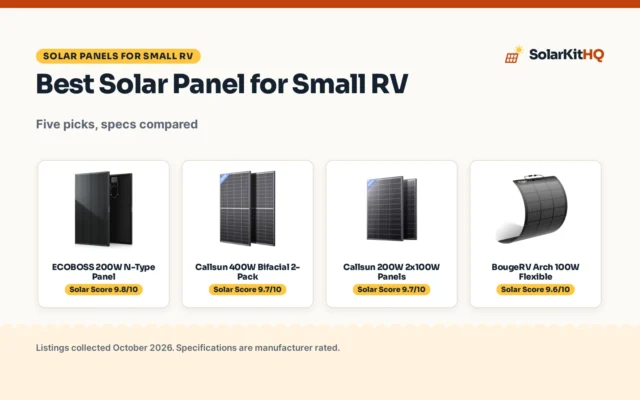
Five solar panels for small RV roofs compared on stated watts, efficiency, size, weather ratings and warranty terms, with every figure taken from the…
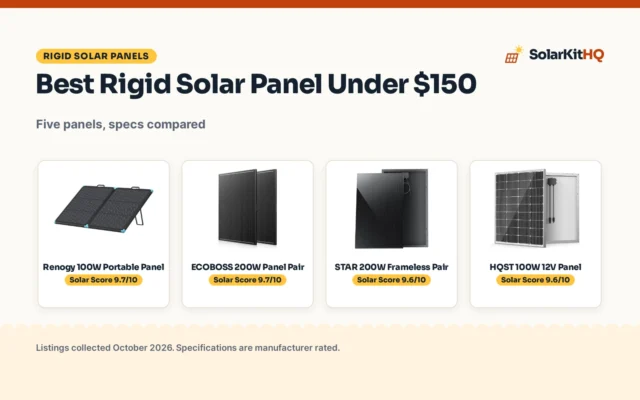
Five solar panels compared by watts, efficiency, voltage, weather rating, size and warranty, from a foldable portable panel to 200W pairs.
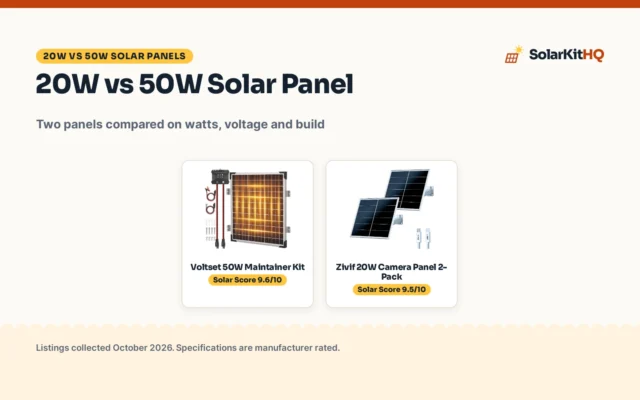
A 20W 5V camera panel 2-pack and a 50W 12V battery maintainer kit compared on output, voltage, build, protections and stated limits.
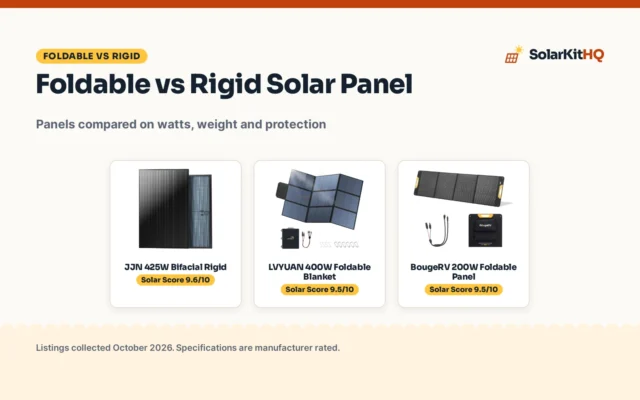
Foldable vs rigid solar panel compared through three listings on watts, weight, size, efficiency and stated protection for moving camp or a fixed spot.
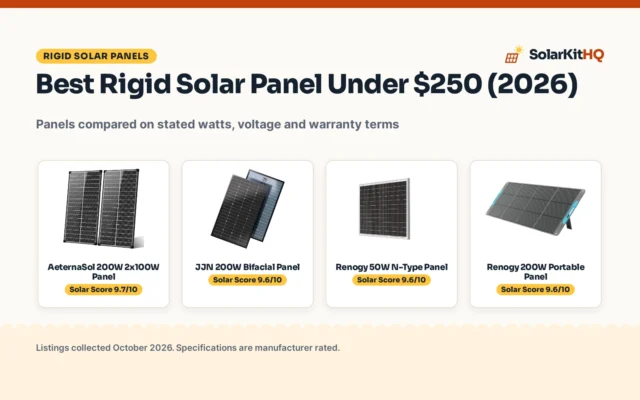
Rigid and portable solar panels compared on stated watts, voltage, efficiency, IP codes and warranty terms for RV, cabin and off-grid use.
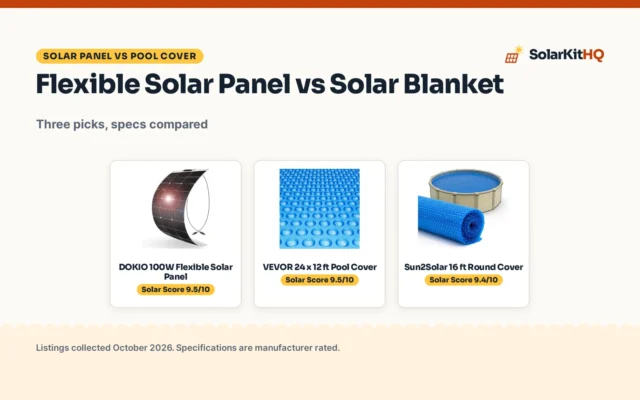
Flexible solar panel vs solar blanket: one side makes electricity for an RV, van or boat, the other warms and covers a pool, per…
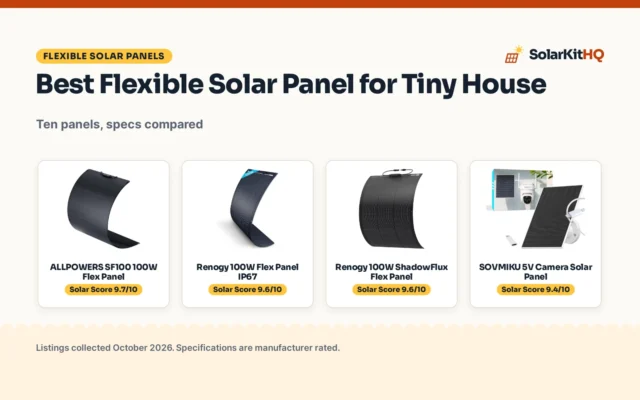
Ten flexible solar panels compared on watts, efficiency, bend, weather protection and warranty terms, with every figure taken from the listings.
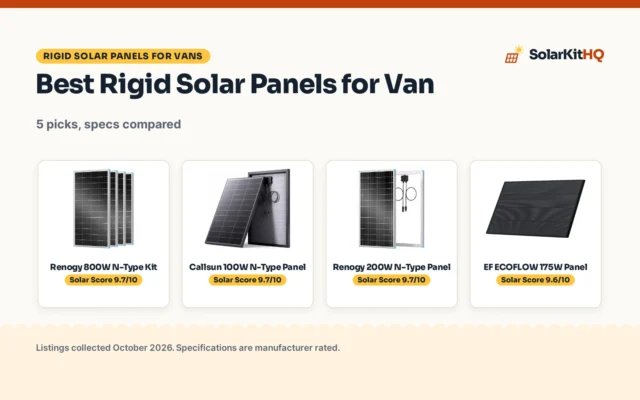
Van roofs reward compact, efficient panels, and these 5 rigid picks are compared on stated watts, N-Type efficiency, weather protection, size and warranty terms.
Glass-framed panels and thin flexible ones solve different problems. Weight, bendability and cell type shape the choice more than headline wattage does.
Decide where the panel will sit and how often it moves. A panel that stays in one spot rewards a sturdier build, while one that travels rewards low weight, and the stated specs make that trade visible.