Power Inverters
Best Power Inverter for Welder (2026): 5 Compared
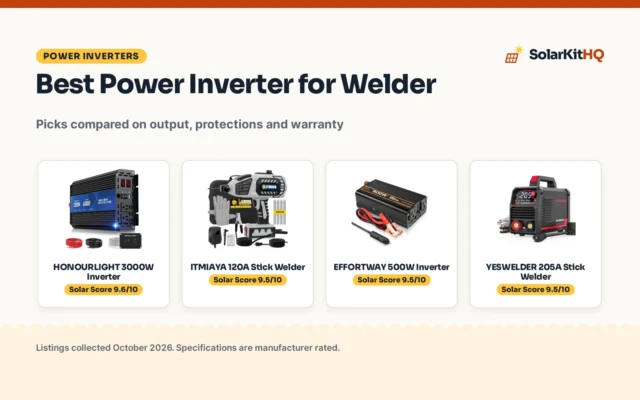
A mixed shelf for welder power: stick welders, a 500W car inverter and title-only listings, compared on stated output, protections and warranty.
Pure sine wave and modified sine power inverters compared by continuous and surge watts, input voltage, outlets, remote options and stated protections.
A mixed shelf for welder power: stick welders, a 500W car inverter and title-only listings, compared on stated output, protections and warranty.
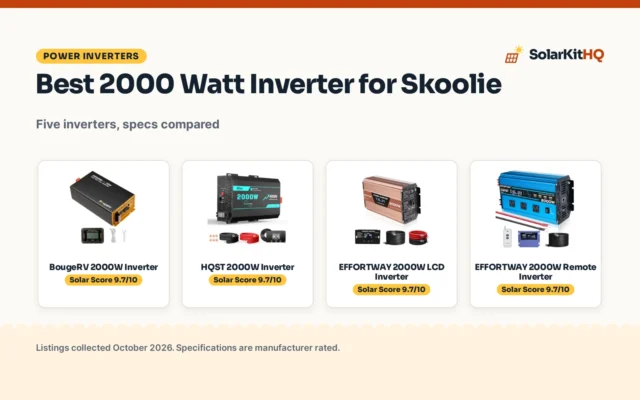
Five 2000W inverters for skoolies compared on waveform, surge power, outlets, USB charging, stated protections and warranty terms.
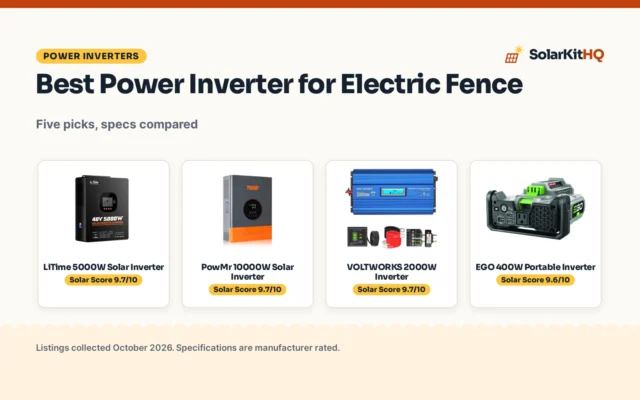
Five power inverters for electric fence power compared on output watts, battery voltage, solar charging, protections and warranty terms, all from the listings.
Surge protectors for campers compared on amps, joules, monitoring, weather codes and warranty terms, with gaps marked as not stated.
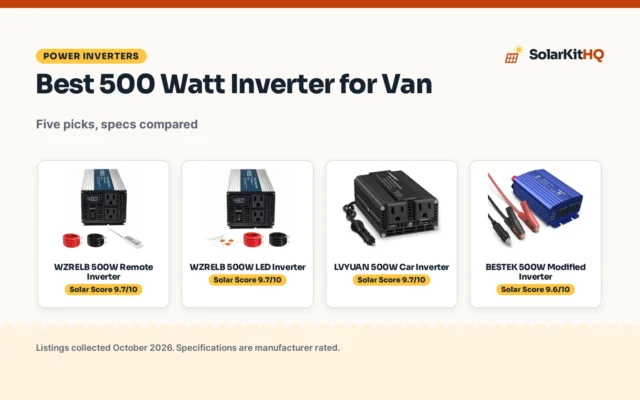
Five 500W inverters for van use compared on input voltage, waveform, outlets, protections and warranty terms, with every figure taken from the listings.
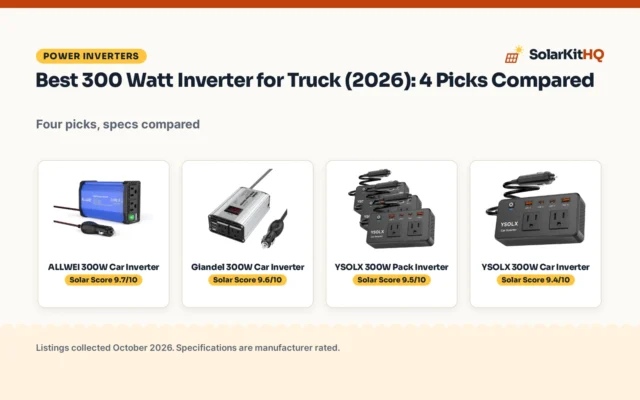
4 inverters for trucks compared on stated continuous watts, peak watts, outlets, protections and warranty, with every figure from the listings.
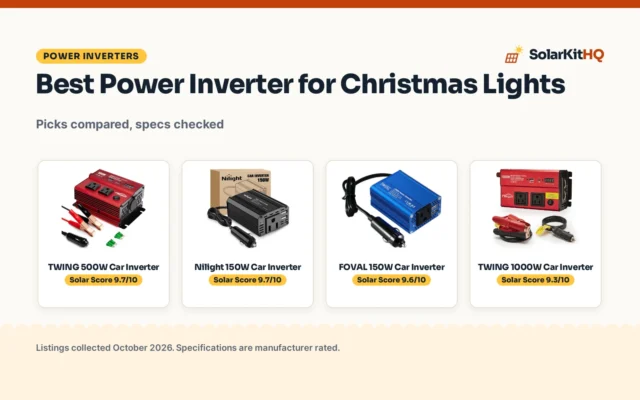
Car power inverters for holiday string lights compared on stated watts, outlets, waveform, protections and warranty terms, with the two title-only picks ranked last.
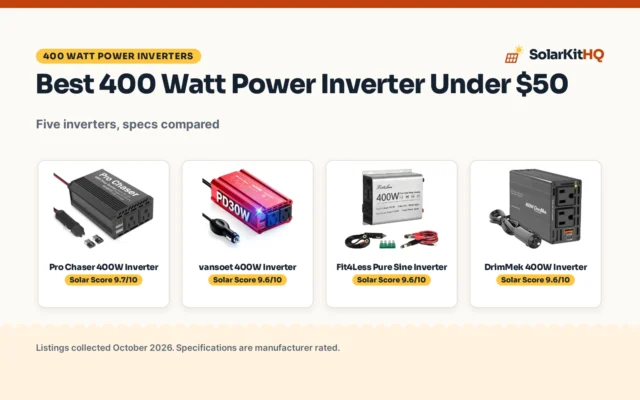
Five 400 watt power inverters compared on waveform, outlets, USB charging and warranty, from a pure sine model with a display to fast-charge USB-C…
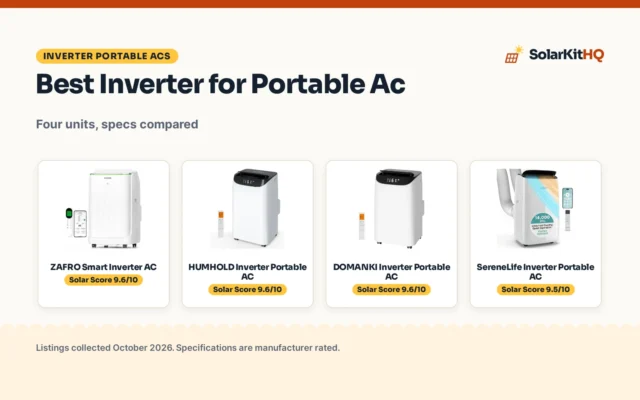
Four inverter portable air conditioners compared on cooling capacity, coverage, noise and warranty, from dual hose 14000 BTU units to 16000 BTU units.
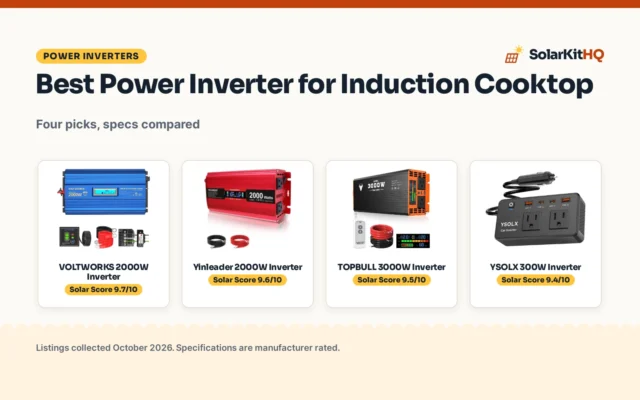
Four power inverters for induction cooktops compared on continuous watts, outlets, displays, protections and warranty, with title-only listings ranked last.
An inverter turns battery DC into household AC. Wattage labels and waveform notes tell you what it can feed and what it cannot.
Read the label on the biggest thing you plan to power and compare its watts with the inverter's continuous rating. Then check surge only for motors, compressors or pumps, which pull more when starting.