On this page
The generator sits in the garage through a quiet season, the mower waits out the winter, and the fuel in each tank sits with them. When you finally pull the cord or turn the key, stale fuel is often the reason an engine that ran well in the fall now cranks and sputters. That stored-fuel problem is what is fuel stabilizer meant to address.
Fuel stabilizer is an additive you mix into gasoline or diesel before storage. The maker lists it as a way to keep fuel fresh during storage, help protect against corrosion and ethanol damage, and support easier starts when the equipment goes back to work. You add it to the tank, fill with fuel, and run the engine briefly so treated fuel reaches the whole fuel system.
SolarKitHQ earns a commission when you buy through links on this page, at no extra cost to you. As an Amazon Associate I earn from qualifying purchases. Affiliate disclosure.
The quick answer
Add stabilizer before storage, not after fuel has already sat untreated. The maker lists STA-BIL Storage as keeping gasoline fresh for up to 24 months during storage for vehicles not in use, boats and outdoor power equipment. The stated dose is 1 oz for every 2.5 gallons of gas, poured into the tank before adding gasoline, followed by running the engine for 5 minutes to treat the entire fuel system. For a generator you keep for outages, that same routine applies before the generator goes back into storage. See the power stations and generators guides for the equipment side of a backup setup.
What is fuel stabilizer in plain terms
Fuel stabilizer is a bottled additive for stored fuel. It is not fuel itself, and it does not replace fresh fuel in an engine that is already running poorly on old gasoline. The makers describe these products as protecting fuel and fuel system parts during storage and in-season idle time, with antioxidants, anti-corrosives and detergents named for the STA-BIL Storage formula. In plain terms, you treat the fuel while it is still fresh so it stays usable for longer in the tank.
Ethanol is part of the picture. Several makers describe their formulas as helping protect against ethanol damage and corrosion in fuel systems. Pro Honda lists its stabilizer as developed to combat problems from fuels containing ethanol and to prevent formation of fuel system deposits, for use in 2 and 4 cycle engines. That ethanol angle matters for small engines that sit between uses, such as generators, mowers and boats.
Storage formulas and in-season treatments
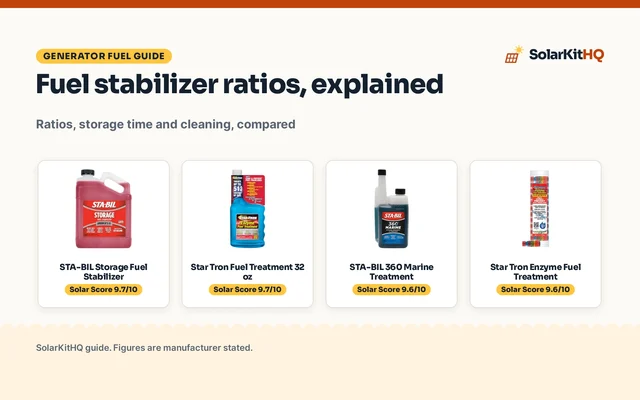
The reference products fall into two groups, and the labels keep them apart. Storage formulas are made for fuel that will sit. STA-BIL Storage is sold for storing vehicles that are not in use, boats and outdoor power equipment during winter months, or for stocking up on fuel. Star Tron Enzyme Fuel Treatment is sold as stabilizing fuel for up to 2 years and helping rejuvenate old, sub-spec fuel, at one fluid ounce per six gallons of fuel.
In-season treatments are made for engines in regular use. STA-BIL 360 Marine is sold as a fuel system cleaner for in-season use, and the maker states plainly that for specific storage needs you should use the storage product instead. The marine treatment dose is stated as 1 oz for every 10 gallons of fuel, with the engine run for 5 minutes after filling. The 8 oz bottle is stated to treat 80 gallons, and the 10 oz bottle is stated to treat 100 gallons. Matching the bottle to the job, storage or in-season, is the main choice.
| Product type | Stated dose | Stated coverage |
|---|---|---|
| STA-BIL Storage | 1 oz per 2.5 gallons | Fresh for up to 24 months |
| STA-BIL 360 Marine | 1 oz per 10 gallons | 8 oz treats 80 gallons |
| Star Tron Enzyme | One fluid ounce per six gallons | Stabilizes for up to 2 years |
| Pro Honda Stabilizer | 32 oz bottle | Treats up to 320 gallons |
These figures are the makers’ stated figures for each bottle. Read the bottle you buy, since dose and coverage differ by product, and follow the directions on that label for your tank size.
How to add it before storage
- Add it before the fuel: the makers list pouring the stabilizer into the fuel tank before adding gasoline, so the incoming fuel mixes it through the tank.
- Fill the tank: add fresh fuel after the stabilizer, using the stated dose for your tank size from the bottle label.
- Run the engine briefly: STA-BIL lists running the engine for 5 minutes after adding fuel, so treated fuel moves through lines, pumps and injectors rather than sitting only in the tank.
- Store the equipment as the manual directs: stabilizer treats the fuel, and the equipment manual still governs storage steps for the engine itself.
For a standby generator, treat the fuel when you refill after an outage or at the start of the storage season, rather than waiting until the next outage. The gas generators guides cover the generator side, and the generator accessories guides cover add-on gear for stored machines.
What stabilizer does not do
Stabilizer is preventive. It is added to fresh fuel before storage, and the makers describe it as keeping fuel fresh and protecting fuel system parts during that storage. It is not a repair for a clogged carburetor, a weak battery or worn engine parts, and it does not turn old fuel that has already sat untreated for a long stretch into fresh fuel on its own. Star Tron is sold as helping rejuvenate old, sub-spec fuel, which is a maker claim for that product, not a promise for every tank. If an engine will not start, work through the manual’s storage and starting checks rather than adding more additive.
Bottle age matters too. STA-BIL lists an expiration of 2 years from opening the product, or 5 years from the date of production shown in the code on the bottle. An old opened bottle on the shelf may be past its stated life, so check the bottle before you rely on it for a storage season.
FAQ: power away from the grid
When should I add fuel stabilizer?
Add it before storage, while the fuel is still fresh. The makers list adding it to the tank before filling with gasoline, then running the engine for 5 minutes so treated fuel reaches the whole system. Adding it at the start of storage is the point; adding it months later to untreated fuel is a different job.
How long does stabilized fuel stay fresh?
It depends on the bottle. STA-BIL Storage is stated to keep gasoline fresh for up to 24 months during storage. Star Tron is stated to stabilize fuel for up to 2 years. Treat those as maker figures for each product, and check the expiration on your bottle before use.
Can I use stabilizer in a generator?
Yes, generators are stored equipment with fuel tanks, and the makers list outdoor power equipment among the uses. Use the dose stated on your bottle, such as 1 oz per 2.5 gallons for STA-BIL Storage, and run the generator for 5 minutes after filling so treated fuel circulates. Follow the generator manual for its own storage steps.
Is fuel stabilizer the same as a fuel system cleaner?
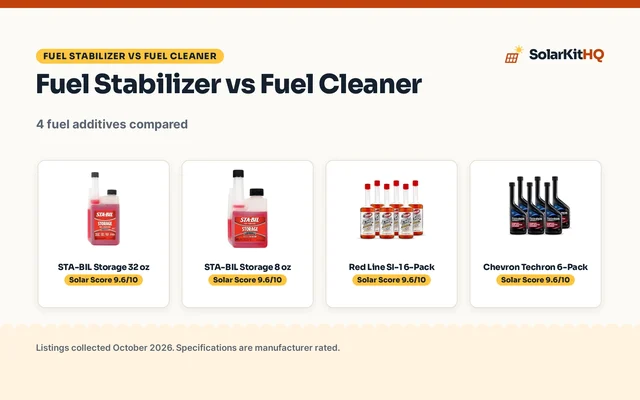
Not exactly. Storage stabilizers are made for fuel that will sit, while in-season treatments such as STA-BIL 360 Marine are sold as fuel system cleaners for engines in use. The marine maker states that for specific storage needs you should use the storage product. Read the bottle’s stated job before you buy.
Related solar guides
See the power stations and generators guides, the gas generators guides and the generator accessories guides for the equipment that uses stored fuel.