On this page
A cabin shower that fades from hot to lukewarm after supper, or a van kitchen tap that runs cold while dishes wait, raises a plain question about how long does tankless water heater last. Makers state warranty terms by part rather than a whole unit lifespan figure, so the honest answer starts with those stated terms and with water, use, placement and care at the site. The steps below show how to read the terms, weigh wear at your site, and plan care and replacement without guessing at a lifespan figure.
SolarKitHQ earns a commission when you buy through links on this page, at no extra cost to you. As an Amazon Associate I earn from qualifying purchases. Affiliate disclosure.
The quick answer: how long does tankless water heater last
Makers state warranty terms by part, and no whole unit lifespan figure is stated. Rheem lists a 15-year heat exchanger warranty and a 5-year parts warranty on the 7.0 GPM models and on the 9.5 GPM model. Those terms set the period the maker stands behind each part under stated conditions. They do not promise that every unit reaches the end of the longest term.
Plan from the shortest term that covers a costly part, from water quality at the site, and from how hard the unit works each day. Hard water, heavy daily use, poor venting, freeze exposure and skipped care shorten life. Soft or treated water, matched capacity, sound placement and steady care help a unit reach the stated terms. The steps below turn that into a site check you can repeat as seasons and use change. See tankless water heater benefits for cabins and RVs for fit at off grid sites.
Step 1: Read the warranty terms part by part
Start with the papers that came with the unit and with the maker terms for your exact model. Read heat exchanger, parts and labor terms as separate promises with separate conditions. Rheem lists a 15-year heat exchanger warranty and a 5-year parts warranty, and the Rheem papers also list 1 Year Labor. A long heat exchanger term helps only when the failure sits in that part and when care and install conditions in the papers are met.
| Part or item | Stated term | What to check |
|---|---|---|
| Rheem heat exchanger | 15-year warranty | Leaks, scale damage and care records in the manual |
| Rheem parts | 5-year warranty | Which parts the term covers and which parts it leaves out |
| Rheem labor | 1 Year Labor | Who pays for removal, refit and call out work after that term |
| Whole unit lifespan | Not stated | Use stated part terms and site conditions, not a guessed lifespan |
Keep the model plate details, install date from your own records and care notes together. When a term needs registration or care proof, the papers state the condition. Meet the condition as written and keep proof with the papers. If your model papers state different terms, follow those papers.
Step 2: Match water, use and placement to the unit
Capacity sets how hard the unit works. Rheem rates a 7.0 GPM model and a 9.5 GPM model, Rinnai rates a 5.3 GPM model, and forimo rates a 4.74 GPM model. A unit that runs near full output for long stretches, or that serves draws beyond the rated flow, faces more heat and wear than a unit with headroom. Match rated flow to peak draws at the site, with cold inlet water in mind, and let the maker sizing guidance in the manual lead.
Water quality drives scale on hot surfaces. Hard water leaves mineral scale that insulates the heat exchanger, forces hotter firing for the same outlet heat, and stresses metal and seals. Placement matters as well. Indoor models need venting and clearances as the manual states, and outdoor models need shelter and freeze care as the manual states. Have a qualified installer handle gas, vent and water connections and follow the maker manual. See hot water heaters for off grid cabins for placement fit at cabin sites.
Step 3: Check scale, venting and freeze risks
Life shortens when heat cannot move cleanly from burner to water, when exhaust cannot leave as designed, or when water sits cold in exposed lines. Check each risk against the manual for your model.
- Scale and flow: mineral scale, clogged inlet screens and low flow can cause uneven heat, noise and shutdowns. Follow maker care for flushing and descaling and keep inlet screens clean as the manual states. See how to clean a tankless hot water heater and descaler solution for tankless water heaters for care paths.
- Venting and air: blocked vents, tight enclosures and poor air supply raise heat stress and can trigger safety shutdowns. Keep vents and clearances as the manual states and have a qualified technician check vent work.
- Freeze and idle time: cold snaps and long idle spells with water left in the unit raise crack and seal risk. Follow maker freeze care for your model, drain as the manual states when the site sits empty in cold weather, and restart as the manual states.
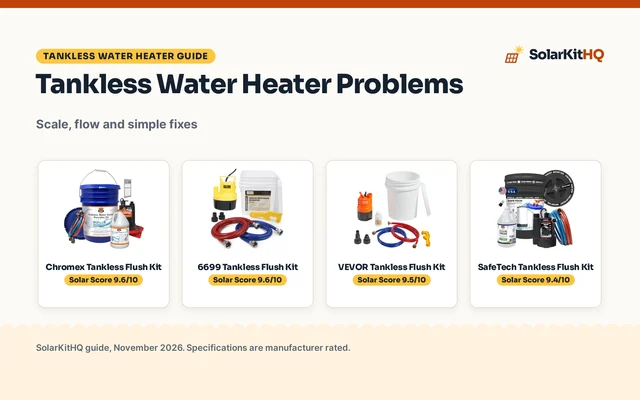
When shutdowns repeat, use tankless water heater problems and simple fixes to sort care issues from faults that need a technician.
Step 4: Plan care and replacement from stated terms
Steady care helps a unit reach stated terms. Follow the manual for flushing, descaling, screen cleaning, vent checks and freeze care, and log each visit in your own records. Use tankless water heater maintenance as a care checklist beside the manual, and keep gas and vent work with a qualified technician.
Plan replacement from part terms and from condition, not from age by itself. A heat exchanger leak, repeated safety shutdowns after care, or a repair quote that approaches replacement cost for your site can tip the choice toward replacement. Compare propane tankless and tank water heaters and propane tankless water heaters when you weigh repair against a new unit, and check stated terms for the new model before you buy.
Ways to make a tankless water heater last longer
- Keep water quality in check with treatment or filtration where the manual calls for it, and flush and descale on the maker schedule for your water.
- Run the unit within rated flow and outlet heat settings in the manual, and avoid needless high heat settings that add scale and stress.
- Keep vents, clearances and inlet screens clear, and act on leaks, noise or uneven heat early with a qualified technician.
- For cold climates and seasonal sites, follow maker freeze care and consider propane tankless water heaters for cold climates when placement or freeze risk drives the choice.
FAQ: power away from the grid
Does a longer heat exchanger warranty mean the whole unit lasts that long?
No, the term covers that part under stated conditions. Rheem lists a 15-year heat exchanger warranty and a 5-year parts warranty, so parts cover ends sooner than heat exchanger cover on those models. Judge life from part terms, water, use and care together.
What shortens tankless water heater life most?
Scale from hard water, heavy use beyond rated flow, poor venting, freeze exposure and skipped care shorten life most at many sites. Each risk adds heat stress or shutdowns that wear metal, seals and controls. Care on the maker schedule and matched capacity ease those risks.
When does repair stop making sense?
Repair stops making sense when a heat exchanger leak, repeated safety shutdowns after care, or scarce parts leave the unit unreliable, or when a repair quote approaches replacement cost for your site. Weigh remaining part terms from your papers against condition and downtime at the site. A qualified technician can confirm fault and parts paths.
Can hard water affect a tankless water heater?
Yes, hard water leaves scale that insulates hot surfaces, raises firing stress and can cause uneven heat and shutdowns. Follow maker guidance on water quality, flushing and descaling for your model. See how long electric water heaters last for a parallel lifespan view across heater types.
Related solar guides
See the propane tankless water heaters, the outdoor propane tankless water heaters, the tankless water heater maintenance guide and the camping and emergency gear guides.