On this page
The lithium bank in the van is full by noon and the old controller just keeps pushing, which is how batteries die young, and why the best mppt solar charge controller for lithium batteries earns its place between the panels and the bank. We compared four MPPT controllers, from a 10A portable to a 100A powerhouse, on charge current, PV input, protections, Bluetooth and stated warranty terms. All four list lithium support, and two were built around it.
SolarKitHQ earns a commission when you buy through links on this page, at no extra cost to you. As an Amazon Associate I earn from qualifying purchases. Affiliate disclosure.
Quick picks
 Best Overall Renogy Rover 40A MPPT: 40A MPPT with 3-year warranty and full protections Check price on Amazon
 Most Current ELUSH 100A MPPT Controller: 100A controller for 12 to 48V systems Check price on Amazon
 Best Bluetooth LiTime 30A MPPT Controller: 30A with built-in Bluetooth and 2-year warranty Check price on Amazon
 Most Portable SOLPERK 10A MPPT Controller: 10A IP67 controller at 0.11 kg Check price on Amazon
The kits we chose
| # | Product | Solar Score | Buy |
|---|---|---|---|
| 1 | Renogy Rover 40A MPPT | 9.8/10 | Buy on Amazon |
| 2 | ELUSH 100A MPPT Controller | 9.7/10 | Buy on Amazon |
| 3 | LiTime 30A MPPT Controller | 9.7/10 | Buy on Amazon |
| 4 | SOLPERK 10A MPPT Controller | 9.5/10 | Buy on Amazon |

Renogy Rover 40A MPPT
A 40A MPPT controller with 12/24V auto-detect, full protections and a 3-year warranty.
Pros
- 40A with 98% conversion and 99% tracking stated
- 4-stage lead-acid and 2-stage lithium charging
- -40 to 149 F operation with low-temp protection
- 3-year material and workmanship warranty stated
Cons
- Bluetooth needs the BT-2 module, sold separately
- 1.1 kg is the second-heaviest unit here
- App shows 30-day history only
- 4-stage charging with equalization is for lead-acid; lithium gets 2 stages
Detailed Review
The listing states a 40A MPPT controller with 12/24V auto-detection, 98% conversion and 99% tracking efficiency, operation from -40 to 149 F with built-in low-temp protection and an app-adjustable cutoff, and support for Gel, AGM, Flooded and Lithium batteries. Charging is 4-stage for lead-acid (bulk, absorption, float, equalization) and 2-stage for lithium, with auto-reactivation and full protections: reverse polarity, overcharge, over-discharge, overload, short-circuit and reverse current. The DC Home app gives real-time data and 30-day history via RS485, with the BT-2 module sold separately. The box includes a remote temperature sensor and 4 mounting brackets at 6.81 by 2.85 by 9.37 inches and 1.1 kg, with a 3-year material and workmanship warranty.
Who it's for: off-grid lithium and lead-acid banks that need a set-and-forget 40A controller with the longest warranty here. Who should skip it: anyone who wants Bluetooth in the box.
Its Solar Score of 9.8/10 comes from performance 33/35, build 22/25, value 21/25, safety 8/10 and warranty 4/5: 88 of 100 points, placed on our 9.2 to 9.8 scale.
Key Specifications
| Current | 40A |
|---|---|
| Conversion | 98%, tracking 99% |
| Stages | 4 lead-acid / 2 lithium |
| Temp range | -40 to 149 F |
Figures as published on the retailer listing, collected 20 October 2026. Performance figures are manufacturer rated.
Safety and Warranty
What this listing states. 6 electrical protections stated: reverse polarity, overcharge, over-discharge, overload, short-circuit, reverse current, so safety scores 8 of 10. 3-year material and workmanship warranty stated. It does not say everything a buyer needs, such as who pays return shipping, so warranty scores 4 of 5. See How We Pick.
Stay under the input limit. Keep your panels' combined open circuit voltage, with cold weather margin, under the controller's stated maximum PV input, connect the battery first unless the manual says otherwise, and fuse both sides as the manual directs.
This is general buying information, not professional advice. Follow each product manual and local rules, and see our Safety Disclaimer.
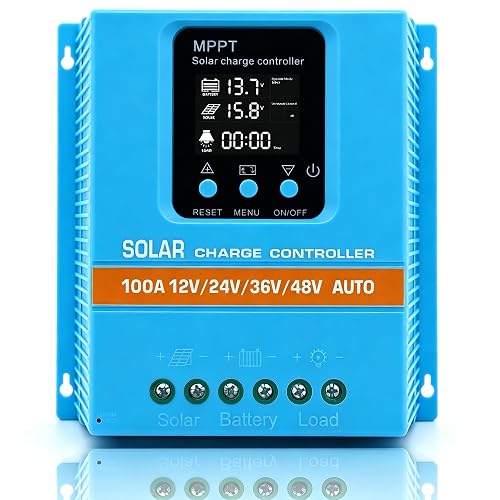
ELUSH 100A MPPT Controller
A 100A MPPT controller for 12V/24V/36V/48V systems with 100V PV input and a 1-year warranty.
Pros
- 100A with 12V/24V/36V/48V auto recognition
- 100V maximum PV input stated
- 99.5% tracking efficiency stated
- Dual USB 5V charging ports
Cons
- 1-year warranty, shorter than the Renogy and LiTime
- 0.95 kg with no dimension stated
- Seven modes add complexity for simple installs
- Spec table lists included components as 'NO'
Detailed Review
The listing states a 100A MPPT controller with automatic 12V/24V/36V/48V recognition, a maximum 100V PV input, 99.5% tracking efficiency, dual USB 5V charging ports and a multi-function LCD with backlight and clock. Seven operating modes include charging, light control, time delay and manual control, with precise time control and a factory reset feature. Protections cover battery over-voltage, over-current, power failure, overcharge, deep discharge, reverse connection and overheating, with real-time PV voltage on the display. It weighs 0.95 kg with no dimension stated, and offers a 1-year warranty with lifetime technical support.
Who it's for: large 24V and 48V arrays that need the most current here. Who should skip it: anyone who wants a longer warranty or a simpler interface.
Its Solar Score of 9.7/10 comes from performance 34/35, build 21/25, value 21/25, safety 8/10 and warranty 3/5: 87 of 100 points, placed on our 9.2 to 9.8 scale.
Key Specifications
| Current | 100A |
|---|---|
| Systems | 12V/24V/36V/48V |
| PV input | Max 100V stated |
| Tracking | 99.5% stated |
Figures as published on the retailer listing, collected 20 October 2026. Performance figures are manufacturer rated.
Safety and Warranty
What this listing states. 7 protections stated: over-voltage, over-current, power failure, overcharge, deep discharge, reverse connection, overheating, so safety scores 8 of 10. 1-year warranty stated. It does not say everything a buyer needs, such as who pays return shipping, so warranty scores 3 of 5. See How We Pick.
Stay under the input limit. Keep your panels' combined open circuit voltage, with cold weather margin, under the controller's stated maximum PV input, connect the battery first unless the manual says otherwise, and fuse both sides as the manual directs.
This is general buying information, not professional advice. Follow each product manual and local rules, and see our Safety Disclaimer.

LiTime 30A MPPT Controller
A 30A MPPT controller with built-in Bluetooth, 900W/24V PV input and a 2-year warranty.
Pros
- Built-in Bluetooth, no extra module needed
- 900W at 24V and 450W at 12V PV input stated
- 99% tracking and 98% peak conversion stated
- 2-year warranty stated
Cons
- 4.4 pounds is the heaviest unit here
- Spec table says plastic housing while the bullets claim die-cast aluminum
- 900W/24V ceiling means big 24V arrays need a bigger controller
- Copper wire connector is a small extra, not a headline feature
Detailed Review
The listing states a 30A MPPT controller for 12/24V systems with 900W PV input on 24V (450W on 12V), 99% tracking efficiency and 98% peak conversion, built-in Bluetooth for remote control and monitoring, an LCD screen with 4 buttons and multiple LED indicators. The bullets claim a die-cast aluminum housing for heat dissipation while the spec table says plastic; trust the bullets for the marketing claim and note the conflict. Protections cover reverse connection, overpower, overvoltage, short-circuit and over-temperature, with a dedicated LiFePO4 charging mode plus lead-acid support. It is 9.65 by 3.25 by 7.09 inches at 4.4 pounds, with a 2-year warranty.
Who it's for: lithium banks that want app monitoring without buying a Bluetooth module. Who should skip it: anyone running a 24V array over 900W.
Its Solar Score of 9.7/10 comes from performance 32/35, build 21/25, value 21/25, safety 8/10 and warranty 3/5: 85 of 100 points, placed on our 9.2 to 9.8 scale.
Key Specifications
| Current | 30A |
|---|---|
| PV input | 900W/24V, 450W/12V |
| Tracking | 99%, conversion 98% |
| Connectivity | Bluetooth built in |
Figures as published on the retailer listing, collected 20 October 2026. Performance figures are manufacturer rated.
Safety and Warranty
What this listing states. 5 protections stated: reverse connection, overpower, overvoltage, short-circuit, over-temperature, so safety scores 8 of 10. 2-year warranty stated. It does not say everything a buyer needs, such as who pays return shipping, so warranty scores 3 of 5. See How We Pick.
Stay under the input limit. Keep your panels' combined open circuit voltage, with cold weather margin, under the controller's stated maximum PV input, connect the battery first unless the manual says otherwise, and fuse both sides as the manual directs.
This is general buying information, not professional advice. Follow each product manual and local rules, and see our Safety Disclaimer.

SOLPERK 10A MPPT Controller
A 10A IP67 MPPT controller for 12V batteries, portable at 0.11 kg.
Pros
- IP67 rating, the only sealed unit here
- 0.11 kg, by far the lightest
- SAE port for plug-and-play connection
- Three LED indicators for panel, battery and full states
Cons
- No warranty term is stated
- 10A and 12V only, the smallest capacity here
- '100% efficient' and '30% more than PWM' are maker claims
- Listing repeats the 12V design paragraph twice
Detailed Review
The listing states a 10A MPPT controller for 12V systems with an IP67 rating, 30% more efficiency than PWM controllers (a maker claim), three LED indicators (blue for panel connected, red for battery connected, green for full), an SAE port for plug-and-play connection and protections against under-voltage, over-voltage, output overload, short circuit and reverse battery connection. It supports AGM, Gel, Flooded, lithium, lead-acid, deep-cycle and sealed 12V batteries at 0.11 kg. The 12V design paragraph appears twice in the bullets. No warranty term is stated.
Who it's for: small 12V setups that need a sealed, pocket-size controller. Who should skip it: anyone with a 24V bank or an array over 10A.
Its Solar Score of 9.5/10 comes from performance 23/35, build 19/25, value 20/25, safety 8/10 and warranty 0/5: 70 of 100 points, placed on our 9.2 to 9.8 scale.
Key Specifications
| Current | 10A |
|---|---|
| System | 12V |
| Weather rating | IP67 stated |
| Weight | 0.11 kg |
Figures as published on the retailer listing, collected 20 October 2026. Performance figures are manufacturer rated.
Safety and Warranty
What this listing states. IP67 rating and 5 protections stated: under-voltage, over-voltage, overload, short circuit, anti-back connect, so safety scores 8 of 10. No warranty term, so warranty scores zero. See How We Pick.
Stay under the input limit. Keep your panels' combined open circuit voltage, with cold weather margin, under the controller's stated maximum PV input, connect the battery first unless the manual says otherwise, and fuse both sides as the manual directs.
This is general buying information, not professional advice. Follow each product manual and local rules, and see our Safety Disclaimer.
As an Amazon Associate I earn from qualifying purchases.
More picks to compare
 Renogy Rover 30A 12V/24V Auto DC InputCheck on Amazon
 EARNMee 60A MPPT Solar Charge ControllerCheck on Amazon
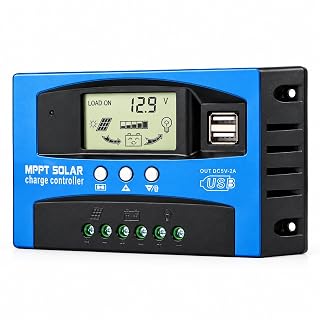 HHFLY Solar Charge Controller MPPT 12/24VCheck on Amazon
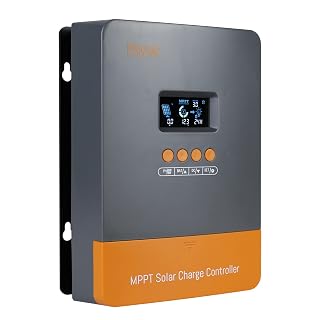 PowMr 60AMP MPPT Solar Charge ControllerCheck on Amazon
Numbers side by side
| Controller | Solar Score | Charge current | PV input | Protections | Warranty | Amazon |
|---|---|---|---|---|---|---|
| Renogy Rover 40A MPPT | 9.8/10 | 40A | Not stated | 6 protections | 3 years | View on Amazon |
| ELUSH 100A MPPT Controller | 9.7/10 | 100A | Max 100V | 7 protections | 1 year | View on Amazon |
| LiTime 30A MPPT Controller | 9.7/10 | 30A | 900W/24V, 450W/12V | 5 protections | 2 years | View on Amazon |
| SOLPERK 10A MPPT Controller | 9.5/10 | 10A | 12V system | 5 protections | Not stated | View on Amazon |
Specifications are manufacturer rated as listed, collected 20 October 2026.
Where the points went
The Solar Score weighs performance, build, value, safety and warranty. For a charge controller, safety means the protection features the listing actually states; every listing here states a full set, so the safety line separates on certifications and weather ratings. Three of the four listings state a warranty term. How we pick explains the weights.
| Product | Solar Score | Perf. /35 | Build /25 | Value /25 | Safety /10 | Warranty /5 |
|---|---|---|---|---|---|---|
| Renogy Rover 40A MPPT | 9.8 | 33 | 22 | 21 | 8 | 4 |
| ELUSH 100A MPPT Controller | 9.7 | 34 | 21 | 21 | 8 | 3 |
| LiTime 30A MPPT Controller | 9.7 | 32 | 21 | 21 | 8 | 3 |
| SOLPERK 10A MPPT Controller | 9.5 | 23 | 19 | 20 | 8 | 0 |
Scores run from 9.2 to 9.8: each product’s point total is placed on that range, so more points always means a higher score.
How to choose the best mppt solar charge controller for lithium batteries
Match the current to the array
Current is the first number to check. The ELUSH handles 100A across 12, 24, 36 and 48V systems with a 100V PV input cap, the Renogy runs 40A on 12/24V, the LiTime runs 30A with 900W of PV on 24V (450W on 12V), and the SOLPERK is a 10A 12V portable. Size the controller above your array’s output, not at it. See our best MPPT solar charge controller for LiFePO4 batteries guide for more lithium-focused options.
Lithium needs its own stage
Lead-acid charging stages do not map cleanly onto lithium. The Renogy is explicit: 4-stage charging (bulk, absorption, float, equalization) for lead-acid and a 2-stage profile for lithium. The LiTime has a dedicated LiFePO4 charging mode, and the ELUSH and SOLPERK list lithium among supported chemistries. If the bank is lithium, pick the controller that names the lithium profile, not just the chemistry. Our LiFePO4 vs AGM battery for RV guide covers the chemistry differences.
Bluetooth and displays
The LiTime has Bluetooth built in for remote control and monitoring, while the Renogy needs the BT-2 module sold separately for its DC Home app and 30-day history. The ELUSH has a multi-function LCD with a clock and 7 operating modes, and the SOLPERK keeps it simple with three LED indicators. The table below lines up current, PV input and connectivity.
| Controller | Current | PV input | Display / connectivity |
|---|---|---|---|
| Renogy Rover 40A MPPT | 40A | Not stated | LCD, app via BT-2 sold separately |
| ELUSH 100A MPPT Controller | 100A | Max 100V | LCD with clock, 7 modes |
| LiTime 30A MPPT Controller | 30A | 900W/24V, 450W/12V | LCD, LEDs, Bluetooth built in |
| SOLPERK 10A MPPT Controller | 10A | 12V system | 3 LED indicators |
Read the warranty lines
The Renogy states a 3-year material and workmanship warranty, the LiTime states 2 years, and the ELUSH states 1 year with lifetime technical support. The SOLPERK states no warranty term. A stated term with a concrete length is the only kind that counts in the score.
Sizing Notes
- Match charge current to the array: 10A to 100A here, and keep the panel output under the controller’s rating.
- Confirm lithium support: all four list lithium, and the Renogy names a 2-stage lithium profile.
- Check the PV input limits: the ELUSH caps at 100V, and the LiTime at 900W on 24V and 450W on 12V.
- Count the warranty: 3 years, 2 years and 1 year are stated, and the SOLPERK states none.
FAQ: power away from the grid
Which controller here handles the most current?
The ELUSH at 100A, then the Renogy at 40A, the LiTime at 30A and the SOLPERK at 10A.
Which listings have Bluetooth?
The LiTime with Bluetooth built in, and the Renogy via the BT-2 module sold separately. The ELUSH and SOLPERK state no Bluetooth.
Which controllers support lithium batteries?
All four. The Renogy names a 2-stage lithium profile, the LiTime has a LiFePO4 charging mode, and the ELUSH and SOLPERK list lithium among supported chemistries.
Which listings state a warranty term?
The Renogy states 3 years, the LiTime states 2 years, and the ELUSH states 1 year. The SOLPERK states no warranty term.
What is the highest PV input voltage stated?
The ELUSH at a maximum 100V PV input. The LiTime states panel watt limits instead, and the others state no PV input figure.
Related solar guides
See every Charge Controllers guide and all Controllers and Inverters guides. Also see our best MPPT solar charge controller for LiFePO4 batteries. Also see our best 12 volt deep cycle battery for RV.
More picks: Renogy Rover 30A MPPT controller, 60A MPPT controller for 12 to 48V, MPPT controller for lead-acid and lithium, PowMr 60A MPPT controller.