On this page
The power is out, the storm is still moving across the county, and the choice of a NOAA radio vs scanner radio decides what you hear next. A NOAA radio stays tuned to the weather band for forecasts and emergency broadcasts, while a scanner radio follows local services across many channels. This comparison covers both sides with radios as concrete examples, so you can match the set to the listening you actually plan to do.
SolarKitHQ earns a commission when you buy through links on this page, at no extra cost to you. As an Amazon Associate I earn from qualifying purchases. Affiliate disclosure.
Noaa radio vs scanner radio: side by side
| Noaa Radio vs Scanner Radio | Uniden SDS150 | XHDATA D228 | Uniden Bearcat SR30C | C. Crane CC Pocket | Amazon |
|---|---|---|---|---|---|
| Side | Scanner radio | NOAA radio | Scanner radio | NOAA radio | |
| Bands | Digital scanner, no band list stated | AM, FM, SW, NOAA | Analog scanner, 10 service banks | AM, FM, NOAA | |
| Channels or presets | Not stated | Not stated | 500 channels | 5 presets | |
| Power | Charge cradle, extra battery slot | USB-C, 2 AA backup | USB, 2 AA alkaline, 2 AA Ni-MH | 2 AA batteries | |
| Weight | Not stated | Not stated | 0.3875 lb | 0.25 lb | |
| Warranty | 1 year | 1 Year | 1 Year | Not stated |
We copied each rating from the seller’s listing as the brand states it; data date 20 November 2026.
Bands and channels
The split between the sides is clear in the bands. The XHDATA D228 covers AM 520 to 1710 kHz, FM 87 to 108 MHz, shortwave 5.6 to 23.0 MHz and NOAA 162.4 to 162.55 MHz, while the C. Crane CC Pocket covers AM, FM and NOAA with 5 one-touch presets. On the scanner side, the Uniden SR30C holds 500 channels with presets for over 32,000 frequencies across 10 service banks, including NOAA weather reports, but it is analog only and does not receive digital communications such as Project 25, DMR or NXDN. The Uniden SDS150 is the digital scanner of the pair, built on software defined radio technology with a True I/Q receiver, but its listing states no band list or channel count, so compare it on the digital reception and GPS it does state.
Power and batteries
Every radio here keeps working away from an outlet, but the power plans differ. The XHDATA D228 runs on a built-in rechargeable battery charged over USB-C and takes 2 AA batteries, not included, when no charging source is available. The C. Crane CC Pocket runs on 2 AA batteries, and the Uniden SR30C gives three options: a USB cable, 2 AA alkaline batteries, not included, or 2 AA rechargeable Ni-MH batteries, not included, with rechargeable batteries charging in the unit over USB. The Uniden SDS150 comes with a charge cradle that has an extra battery charging slot, but the extra battery is sold separately and the listing states no battery type.
Size and weight
The C. Crane CC Pocket is the smallest radio here by the stated figures: 2.5 by 1.0 by 4.25 inches and 0.25 pounds, with a removable belt clip. The XHDATA D228 measures 5 by 1.18 by 2.95 inches with a rear stand, and its listing states no weight. The Uniden SDS150 measures 2.25 by 2.0 by 6.1 inches with no stated weight, and the Uniden SR30C is the largest stated size at 7.5 by 4.5 by 2.4 inches and 0.3875 pounds. If the radio rides in a pocket or a small bag, the C. Crane is the easy fit; if it sits on a desk or nightstand, the XHDATA stand and the larger scanner bodies matter less.
What the listings leave unclear
Two listings state no weight: the XHDATA D228 and the Uniden SDS150. The SDS150 also states no band list, no channel count and no battery type, and it claims extended battery life without a run time figure. The C. Crane CC Pocket states no warranty term and no shortwave band. None of the four states a run time figure, and only the SDS150 states a water resistance figure, JIS4/IPX4. Compare each radio on the figures its listing does give.
Four examples
| # | Product | Solar Score | Buy |
|---|---|---|---|
| 1 |  Uniden SDS150 | 9.6/10 | Buy on Amazon |
| 2 |  XHDATA D228 | 9.6/10 | Buy on Amazon |
| 3 | 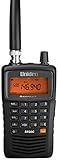 Uniden Bearcat SR30C | 9.5/10 | Buy on Amazon |
| 4 | 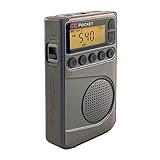 C. Crane CC Pocket | 9.5/10 | Buy on Amazon |

Uniden SDS150
A digital handheld scanner with software defined radio technology, a built-in GPS receiver, app control and a charge cradle.
Pros
- Software defined radio with a True I/Q receiver for weak-signal work, per the listing
- Built-in GPS receiver for field use
- Water-resistant to JIS4/IPX4 standards, per the listing
- Charge cradle with an extra battery charging slot
Cons
- Extra battery sold separately, so the spare slot needs another purchase
- No channel count or band list is stated
- No weight is stated
- App control depends on a smartphone with the U/AWARE app
Detailed Review
The listing states a digital radio scanner built on software defined radio technology with a True I/Q receiver, a built-in GPS receiver, Bluetooth connectivity to the U/AWARE smartphone app, a charge cradle with an extra battery charging slot, and water resistance to JIS4/IPX4 standards. The maker describes it as its most advanced digital radio scanner, with enhanced sensitivity, a new control layout and digital display, and optimized power management for extended battery life. It measures 2.25 by 2.0 by 6.1 inches, and the warranty description is 1 year. No run time figure is stated.
Who it's for: scanner listeners who want digital reception, GPS and app control in a handheld set. Who should skip it: anyone who wants a stated channel count or a spare battery in the box.
Its Solar Score of 9.6/10 comes from performance 32/35, build 22/25, value 20/25, safety 6/10 and warranty 1/5: 81 of 100 points, placed on our 9.2 to 9.8 scale.
Key Specifications
| Type | Digital scanner, SDR, True I/Q receiver |
|---|---|
| GPS | Built-in GPS receiver |
| Water resistance | JIS4/IPX4 |
| Size | 2.25 x 2.0 x 6.1 in |
Taken from the seller's listing on 20 November 2026. Capacity and output figures are rated by the manufacturer.
Safety and Warranty
What this listing states. Built-in GPS receiver and water resistance to JIS4/IPX4 stated, so safety scores 6 of 10. 1 year warranty stated. It does not say everything a buyer needs, such as who pays return shipping, so warranty scores 1 of 5. See How We Pick.
Follow the manual. Connect and use the product as the maker describes, stay within every stated rating, and read the manual before first use.
This is general buying information, not professional advice. Follow each product manual and local rules, and see our Safety Disclaimer.

XHDATA D228
A four-band portable radio with NOAA weather, AM, FM and shortwave, USB-C charging, AA backup power and a built-in flashlight.
Pros
- Four bands: AM, FM, shortwave and NOAA weather
- USB-C charging plus 2 AA batteries as backup power
- Built-in flashlight and rear stand for a desk or nightstand
- Large tuning dial and 3.5 mm headphone jack for private listening
Cons
- No weight is stated
- AA batteries not included
- No memory presets are stated
- No clock, alarm or sleep timer is stated
Detailed Review
The listing states a portable radio covering AM 520 to 1710 kHz, FM 87 to 108 MHz, shortwave 5.6 to 23.0 MHz and NOAA 162.4 to 162.55 MHz, with a DSP receiver chip for stable tuning. Power comes from a built-in rechargeable battery charged over USB-C, with 2 AA batteries as backup when no charging source is available. It measures 5 by 1.18 by 2.95 inches, has a rear stand, a built-in flashlight and a 3.5 mm headphone jack, and the warranty description is 1 Year.
Who it's for: listeners who want NOAA weather plus AM, FM and shortwave in one pocket radio with USB-C and AA power. Who should skip it: anyone who wants memory presets or a clock and alarm built in.
Its Solar Score of 9.6/10 comes from performance 30/35, build 21/25, value 21/25, safety 5/10 and warranty 1/5: 78 of 100 points, placed on our 9.2 to 9.8 scale.
Key Specifications
| Bands | AM, FM, SW, NOAA |
|---|---|
| NOAA band | 162.4-162.55 MHz |
| Power | USB-C rechargeable, 2 AA backup |
| Size | 5 x 1.18 x 2.95 in |
Taken from the seller's listing on 20 November 2026. Capacity and output figures are rated by the manufacturer.
Safety and Warranty
What this listing states. NOAA weather band for emergency broadcasts and a built-in flashlight stated, so safety scores 5 of 10. 1 Year warranty stated. It does not say everything a buyer needs, such as who pays return shipping, so warranty scores 1 of 5. See How We Pick.
Follow the manual. Connect and use the product as the maker describes, stay within every stated rating, and read the manual before first use.
This is general buying information, not professional advice. Follow each product manual and local rules, and see our Safety Disclaimer.

Uniden Bearcat SR30C
A compact analog handheld scanner with 500 channels, Close Call RF capture and three power options.
Pros
- 500 channels with presets for over 32,000 frequencies
- 10 service banks, including NOAA weather reports
- Three power options: USB cable, 2 AA alkaline or 2 AA rechargeable Ni-MH batteries
- Close Call RF capture tunes to nearby transmitters
Cons
- Analog only: does not receive digital communications such as Project 25, DMR or NXDN
- AA batteries not included
- Largest stated size here at 7.5 by 4.5 by 2.4 inches
- 1-year warranty
Detailed Review
The listing states a compact analog handheld scanner with 500 channels, Close Call RF capture, Turbo Search, PC programming, Quick Search and memory backup, with presets for over 32,000 frequencies across 10 service banks covering non-digital police, fire and emergency, NOAA weather reports, marine, racing, civil aircraft, ham radio, railroad and CB radio. The listing states plainly that this scanner is not for receiving digital communications. Power comes from a USB cable, 2 AA alkaline batteries or 2 AA rechargeable Ni-MH batteries, and rechargeable batteries can charge in the unit over USB. It measures 7.5 by 4.5 by 2.4 inches, weighs 0.3875 pounds, and the warranty description is 1 Year Manufacturer.
Who it's for: listeners who want a wide analog scanner with many presets and flexible AA or USB power. Who should skip it: anyone in an area where police, fire or emergency services use digital trunking.
Its Solar Score of 9.5/10 comes from performance 28/35, build 20/25, value 21/25, safety 4/10 and warranty 1/5: 74 of 100 points, placed on our 9.2 to 9.8 scale.
Key Specifications
| Channels | 500 channels |
|---|---|
| Service banks | 10 banks, over 32,000 frequencies |
| Power | USB, 2 AA alkaline, 2 AA Ni-MH |
| Weight | 0.3875 lb |
Taken from the seller's listing on 20 November 2026. Capacity and output figures are rated by the manufacturer.
Safety and Warranty
What this listing states. NOAA weather reports in the preset service banks stated, so safety scores 4 of 10. 1 Year Manufacturer warranty stated. It does not say everything a buyer needs, such as who pays return shipping, so warranty scores 1 of 5. See How We Pick.
Follow the manual. Connect and use the product as the maker describes, stay within every stated rating, and read the manual before first use.
This is general buying information, not professional advice. Follow each product manual and local rules, and see our Safety Disclaimer.

C. Crane CC Pocket
A pocket AM, FM and NOAA weather radio with 5 memory presets, a clock, alarm and sleep timer.
Pros
- 5 one-touch memory presets
- Clock, alarm, sleep timer and backlight
- 0.25 pounds with a removable belt clip
- Included earbuds for private listening
Cons
- No warranty term is stated
- Runs only on 2 AA batteries, with no USB charging stated
- AM, FM and NOAA only, with no shortwave band stated
- Only 5 memory presets
Detailed Review
The listing states a pocket AM, FM and NOAA weather band radio with 5 one-touch memory presets, a built-in speaker or included earbuds, a backlight, sleep timer, clock and alarm, and a removable belt clip. It runs on 2 AA batteries, measures 2.5 by 1.0 by 4.25 inches and weighs 0.25 pounds. No warranty term is stated.
Who it's for: listeners who want the smallest radio here with a clock, alarm and presets for weather and local stations. Who should skip it: anyone who wants shortwave, USB charging or a stated warranty.
Its Solar Score of 9.5/10 comes from performance 26/35, build 20/25, value 20/25, safety 5/10 and warranty 0/5: 71 of 100 points, placed on our 9.2 to 9.8 scale.
Key Specifications
| Bands | AM, FM, NOAA |
|---|---|
| Presets | 5 one-touch presets |
| Power | 2 AA batteries |
| Weight | 0.25 lb |
Taken from the seller's listing on 20 November 2026. Capacity and output figures are rated by the manufacturer.
Safety and Warranty
What this listing states. NOAA weather band stated, so safety scores 5 of 10. No warranty term, so warranty scores zero. See How We Pick.
Follow the manual. Connect and use the product as the maker describes, stay within every stated rating, and read the manual before first use.
This is general buying information, not professional advice. Follow each product manual and local rules, and see our Safety Disclaimer.
As an Amazon Associate I earn from qualifying purchases.
Where the points went
The Solar Score weighs performance, build, value, safety and warranty. For radios, safety means a stated NOAA weather band for emergency broadcasts, water resistance, or a built-in GPS receiver that fixes position in the field. Three of the four state a warranty term: the XHDATA, the SDS150 and the SR30C each state a 1-year warranty, while the C. Crane listing states none. How we pick explains the weights.
| Product | Solar Score | Perf. /35 | Build /25 | Value /25 | Safety /10 | Warranty /5 |
|---|---|---|---|---|---|---|
| Uniden SDS150 | 9.6 | 32 | 22 | 20 | 6 | 1 |
| XHDATA D228 | 9.6 | 30 | 21 | 21 | 5 | 1 |
| Uniden Bearcat SR30C | 9.5 | 28 | 20 | 21 | 4 | 1 |
| C. Crane CC Pocket | 9.5 | 26 | 20 | 20 | 5 | 0 |
We place weighted points on a scale whose ends are 9.2 and 9.8. Because the mapping is straight, a unit with more points never shows less.
Noaa radio vs scanner radio: which should you choose?
Choose a NOAA radio if the job is weather and emergency broadcasts with simple tuning. The XHDATA D228 covers AM, FM, shortwave and NOAA with USB-C and AA power, and the C. Crane CC Pocket fits a pocket at 0.25 pounds with a clock and alarm. Choose a scanner radio if the job is following local services: the Uniden SDS150 is the digital pick with GPS and app control, and the Uniden SR30C is the analog pick with 500 channels across 10 service banks.
| If you need | Look at |
|---|---|
| Weather alerts with simple tuning | XHDATA D228, AM, FM, SW and NOAA bands |
| Smallest radio in this group | C. Crane CC Pocket, 0.25 lb |
| Digital scanning with GPS | Uniden SDS150 |
| Widest preset coverage stated | Uniden Bearcat SR30C, presets for over 32,000 frequencies |
Sizing Notes
- Match the bands to what you want to hear: NOAA 162.4 to 162.55 MHz on the XHDATA for weather, or 500 channels across 10 service banks on the SR30C for local services.
- Match the power source to the outage plan: USB-C plus 2 AA batteries on the XHDATA, 2 AA batteries on the C. Crane and the SR30C, and a charge cradle on the SDS150.
- Check the size against the bag or pocket: the C. Crane measures 2.5 by 1.0 by 4.25 inches, the XHDATA 5 by 1.18 by 2.95 inches.
- Check the water resistance: the SDS150 states JIS4/IPX4, and the other listings state no water resistance figure.
- Check the warranty term before ordering: 1 year on the XHDATA, the SDS150 and the SR30C, and none stated for the C. Crane.
FAQ: power away from the grid
Can a scanner radio receive NOAA weather broadcasts?
One scanner here states it: the Uniden SR30C lists NOAA weather reports among its 10 preset service banks. The Uniden SDS150 listing does not state NOAA reception, so a dedicated NOAA radio is the sure route to the weather band.
Which of these radios runs on AA batteries?
Three of them. The XHDATA D228 takes 2 AA batteries as a backup to its built-in rechargeable battery, the C. Crane CC Pocket runs on 2 AA batteries, and the Uniden SR30C runs on 2 AA alkaline or 2 AA rechargeable Ni-MH batteries. The SDS150 uses a charge cradle, and its listing does not state a battery type.
Which scanner here receives digital signals?
The Uniden SDS150, which the maker describes as a digital radio scanner with software defined radio technology. The Uniden SR30C is analog only and does not receive digital communications such as Project 25, DMR or NXDN.
Which radio here weighs the least?
The C. Crane CC Pocket at 0.25 pounds. The Uniden SR30C is listed at 0.3875 pounds, and the XHDATA and SDS150 listings state no weight.
What warranty does each radio state?
The XHDATA D228, the Uniden SDS150 and the Uniden SR30C each state a 1-year warranty. The C. Crane CC Pocket listing states no warranty term.
Related solar guides
See every Emergency Radios and Communication guide and all Emergency Prep guides. Also see the best temporary emergency generator picks and the best portable power station for camping guide.