On this page
On a bright morning after a dusty week, the panels on the roof look dull and the water from the tap runs only warm, and that is when solar water heater maintenance earns its keep. Solar water heater maintenance is the routine of cleaning the collectors, checking the pipes and pump, flushing sediment and checking the water, so the system keeps heating water through the season. This guide walks through that routine step by step, with the figures the listings state where a size or a flow rate matters.
SolarKitHQ earns a commission when you buy through links on this page, at no extra cost to you. As an Amazon Associate I earn from qualifying purchases. Affiliate disclosure.
Solar water heater maintenance in short
Clean the collectors so sunlight reaches the absorber, check every pipe joint and the pump for leaks, flush sediment out of the tank, and check the water so scale and corrosion stay in check. Do the visual checks through the season, clean when dirt builds up, and give the system a full service before winter. The steps below use the figures the listings state, and the rest comes from the routine itself.
Step 1: Inspect the collectors
Start with your eyes. Look at each collector for cracked glass, loose frames, leaves, dust and bird droppings, and look at the pipes for damp joints, stains and worn insulation. Shade from a tree that grew over the summer cuts output as surely as dirt does, so note any branch that now crosses the glass. See whether solar panels need direct sun if you are unsure how much shade matters. Write down what you see before you touch anything, so you can check after cleaning whether the water runs hotter.
Step 2: Clean the collectors
Clean glass lets sunlight through, and a soft brush with clean water does the job on most dirt. Use a telescoping pole to reach the glass without climbing: a Poolvio pole (on Amazon) adjusts from 20 to 50 inches, a Sepetrel pole (on Amazon) reaches 57.5 inches and an Intex pole (on Amazon) reaches 100 inches. Pair the pole with a soft brush head, such as the 10 inch Poolvio brush or the 13.5 inch Sepetrel brush, and work from the top edge down so dirty water runs off the glass. Rinse with clean water and let the glass dry before you judge the result.
| Tool | Size in the listings | Use |
|---|---|---|
| Telescoping pole | Poolvio 20 to 50 inches; Sepetrel 57.5 inches; Intex 100 inches | Reach the glass without climbing |
| Brush head | Poolvio 10 inches; Sepetrel 13.5 inches | Loosen dirt from the glass |
| Skimmer net | Fine mesh, 200 um on the Betta basket | Lift leaves and debris from the water |
Step 3: Check flow, pressure and leaks
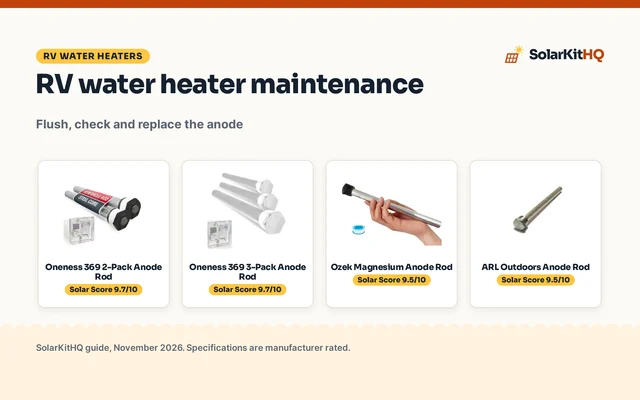
Water has to move for the heater to work, so check the pump and the pipes next. Listen for the pump running, feel whether the pipes to and from the collectors warm up, and look for drips at every joint. Match the pump to the flow the manual states: for scale, an Intex pool vacuum lists a minimum flow rate of 800 GPH for its filter pump, and a pump below its stated flow leaves dirt behind. Check the pressure relief valve by lifting its lever briefly and letting it snap back, and watch for water that keeps running after it closes. Any work on the electrical side of the pump or controller belongs to a licensed electrician. See RV water heater maintenance for the tank checks that go with a flush.
Step 4: Flush sediment and check the water
Sediment settles in the tank and scale forms where hard water sits hot, so flush the tank and check the water as part of the routine. Open the drain, let the tank empty, and refill it with clean water until the outflow runs clear. Check the water with strips: a Potchen kit includes 100 strips for pH and chlorine, and the reading tells you whether the chemistry needs attention. For a pool heater, match the system to the pool: a Jeavle floating solar device (on Amazon) is sized for pools up to 45,000 gallons, so check your own pool volume against the figure the maker states. See how to clean an RV water tank for the cleaning step that follows a flush.
Winter care and storage
Cold is the season that breaks a solar water heater, so give it attention before the first frost. Drain the collectors and pipes if the manual calls for it, or confirm the freeze protection is in place, and leave the system dry if it will sit unused through the cold months. Solar-powered accessories follow the same rule: the Betta listing says to rinse with clean water, let the unit dry completely and store it indoors at room temperature, away from high heat. Solar-charged gear shows the same pattern: a Betta skimmer (on Amazon) runs 30 hours or more on a single charge and recharges in 5 to 6 hours under direct sunlight. Cover the collectors if the maker says to, and check the system again before the first warm week brings it back into use.
FAQ: power away from the grid
How often should you clean solar water heater panels?
Clean them when you can see dirt, leaves or droppings on the glass, and check them after a storm or a dusty spell. A quick look each time you pass the system beats a fixed schedule, because a shaded or dusty panel shows up in cooler water long before a calendar date arrives.
What tools do you need for solar water heater maintenance?
A soft brush, a telescoping pole, clean water and a bucket cover most of the work. A Poolvio pole adjusts from 20 to 50 inches and a Sepetrel pole reaches 57.5 inches, so you can reach the glass without climbing, and a Potchen kit includes 100 strips for pH and chlorine. Keep a spare cloth and a dry place to set parts while you work.
How do you know the pump is moving water?
Listen for the pump running and feel the pipes to and from the collectors: the pipe leaving the collector should feel warmer than the pipe going in when the sun is on the glass. If the pipes stay cold and the tank stays cool, check for a closed valve, a blocked filter or air in the line before you call for help. An Intex pool vacuum lists a minimum flow rate of 800 GPH for its filter pump, which shows how makers state the flow a pump must give.
Can a solar water heater run through winter?
It can if the system has freeze protection and the pipes and tank stay full and moving, but a drained system must stay drained until the cold passes. Store solar-powered accessories indoors and dry, as the Betta listing directs, and check the whole system before the first warm week. If you are unsure about the freeze protection on your unit, ask the maker or a licensed installer.
Related solar guides
See the maintenance of a solar system, the guide to repairing solar panels and every solar outdoor guide.