On this page
A battery bank at a campsite at dusk, with the lights dimming and no gauge to say how much charge is left, is where battery monitor vs bms becomes a choice about what you want to know. The short answer: a battery monitor watches the battery and reports what it sees, while a BMS also manages protection for the cells. This guide compares two monitors and two BMS units on voltage, current, app monitoring, protection and warranty terms. Pick the monitor side for detailed data on a phone; pick the BMS side for protection and cell balancing built in.
SolarKitHQ earns a commission when you buy through links on this page, at no extra cost to you. As an Amazon Associate I earn from qualifying purchases. Affiliate disclosure.
Battery Monitor vs BMS: side by side
| Battery Monitor vs BMS | JKBMS 300A Inverter BMS | JKBMS 200A Inverter BMS | Victron SmartShunt 500A | KONNWEI BK400 Monitor | Amazon |
|---|---|---|---|---|---|
| Side | BMS | BMS | Battery monitor | Battery monitor | |
| Voltage range | Not stated | Not stated | 6.5 to 70V | 6 to 48V | |
| Current | 300A continuous, 600A max | 200A continuous, 400A for 2 minutes | 500 amp | Not stated | |
| Protection stated | Overvoltage, undervoltage, overcurrent, temperature, short-circuit | Overvoltage, undervoltage, overcurrent, temperature, short-circuit | Not stated | Reverse-polarity and circuit | |
| Warranty | 1 year | 1 year | 5 years | Not stated |
All numbers here are manufacturer claims from the listings, not our measurements (19 November 2026).
What a monitor does and what a BMS does
A monitor reports. The Victron shunt shows state of charge, time remaining, voltage, current, amp hours and charge cycles in the VictronConnect app, and shares live data with other Victron devices through VE.Smart Networking. The KONNWEI monitor shows live voltage, waveform and temperature and manages up to 6 monitors from one app. A BMS goes further: both JKBMS units watch overvoltage, undervoltage, overcurrent, temperature and short-circuit conditions, balance cells at 2A and talk to inverters over CAN and dual RS485. The Victron alarms on urgent matters but states no protection cutoff, and the KONNWEI states reverse-polarity and circuit protection.
Voltage and current
The voltage ranges use different units. The Victron covers 6.5V to 70V and the KONNWEI covers 6V to 48V, while the two BMS units state 8S to 16S cell counts and no voltage range in volts. Current is the same story: the Victron shunt is rated at 500 amp, the JKBMS 200A lists 200A continuous and 400A for 2 minutes, and the JKBMS 300A lists 300A continuous and 600A maximum. The KONNWEI states no current rating. Do not read the 500 amp shunt figure as more power than a 300A BMS: the shunt measures it, the BMS carries and limits it.
Protection and balancing
Protection is where the two sides split. Both JKBMS units monitor overvoltage, undervoltage, overcurrent, temperature and short-circuit conditions, and both state 2A active cell balancing; the 300A unit adds ±3 mV cell voltage accuracy. The KONNWEI states reverse-polarity and circuit protection. The Victron states alarm notifications for urgent matters and no protection features. A monitor tells you something is wrong; a BMS is the part that acts on it.
What the listings leave unclear
Several gaps matter. The BMS units give 8S to 16S cell counts and no voltage range in volts, so match them by cell count. The 300A unit states a 600A maximum discharge with no duration, while the 200A unit states 400A for 2 minutes. The 200A unit states high-precision acquisition without a figure, while the 300A unit states ±3 mV. The KONNWEI states no warranty term or current rating, and the Victron states no protection features.
Four examples
| # | Product | Solar Score | Buy |
|---|---|---|---|
| 1 |  JKBMS 300A Inverter BMS | 9.7/10 | Buy on Amazon |
| 2 |  JKBMS 200A Inverter BMS | 9.6/10 | Buy on Amazon |
| 3 |  Victron SmartShunt 500A | 9.6/10 | Buy on Amazon |
| 4 |  KONNWEI BK400 Monitor | 9.5/10 | Buy on Amazon |

JKBMS 300A Inverter BMS
A 300A inverter BMS with 2A active cell balancing, Bluetooth app monitoring and CAN and RS485 communication for 8S to 16S LiFePO4, Li-ion and LTO banks.
Pros
- 300A continuous charge and discharge, maximum discharge up to 600A
- 2A active cell balancing with cell voltage accuracy of ±3 mV
- Bluetooth app shows cell voltage, pack voltage, current, temperature, remaining capacity, state of charge and alarms
- CAN and dual RS485 support compatible inverter protocols, with monitoring for up to 16 units
Cons
- 1-year manufacturer warranty, the lowest stated term here
- 11.81 inches long, the longest case here
- Voltage range in volts is not given; the listing gives 8S to 16S cell counts
- Built for large solar storage and home backup, not for a single vehicle battery
Detailed Review
The listing states a 300A inverter BMS for 8S to 16S LiFePO4, Li-ion and LTO banks, with 300A continuous charge and discharge, maximum discharge up to 600A, 2A active cell balancing and cell voltage accuracy of ±3 mV. The Bluetooth app shows cell voltage, pack voltage, current, temperature, remaining capacity, state of charge and alarms, and CAN and dual RS485 support compatible inverter protocols, with monitoring for up to 16 units. It monitors overvoltage, undervoltage, charge and discharge overcurrent, high and low temperature and short-circuit conditions, and supports charge-current limiting, heating control and two dry contacts. The case is 11.81 by 3.94 by 0.94 inches at 1.54 pounds, and the warranty is 1 year.
Who it's for: a builder of a large solar storage or home backup bank who needs 300A continuous. Who should skip it: anyone monitoring a single vehicle battery, since this BMS is built for large banks.
Its Solar Score of 9.7/10 comes from performance 32/35, build 21/25, value 20/25, safety 8/10 and warranty 1/5: 82 of 100 points, placed on our 9.2 to 9.8 scale.
Key Specifications
| Current | 300A continuous, 600A max discharge |
|---|---|
| Balancing | 2A active, ±3 mV accuracy |
| Cells | 8S to 16S LiFePO4, Li-ion, LTO |
| Size | 11.81 by 3.94 by 0.94 in, 1.54 lb |
Taken from the seller's listing on 19 November 2026. Capacity and output figures are rated by the manufacturer.
Safety and Warranty
What this listing states. Overvoltage, undervoltage, overcurrent, high and low temperature and short-circuit monitoring stated, so safety scores 8 of 10. 1 year manufacturer warranty stated. It does not say everything a buyer needs, such as who pays return shipping, so warranty scores 1 of 5. See How We Pick.
Install it right. Fit shunts, bus bars and fuses within their stated current ratings, follow the wiring order in the manual, and disconnect the battery before you work on any connection.
This is general buying information, not professional advice. Follow each product manual and local rules, and see our Safety Disclaimer.
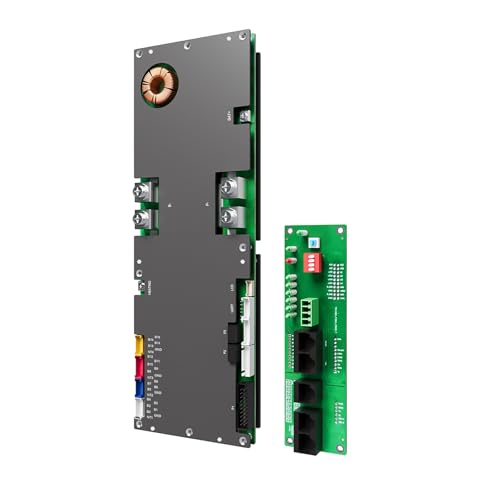
JKBMS 200A Inverter BMS
A 200A inverter BMS with 2A active cell balancing, Bluetooth app monitoring and CAN and RS485 communication for 8S to 16S LiFePO4, Li-ion and LTO banks.
Pros
- 200A continuous charge and discharge, maximum discharge up to 400A for 2 minutes
- 2A active cell balancing helps reduce voltage differences between cells
- Bluetooth app shows cell voltage, pack voltage, current, temperature, remaining capacity, state of charge and alarms
- CAN and dual RS485 support compatible inverter protocols, with monitoring for up to 16 units
Cons
- 1-year manufacturer warranty, the lowest stated term here
- 11.81 inches long, the longest case here
- Voltage range in volts is not given; the listing gives 8S to 16S cell counts
- Built for solar storage, home backup and off-grid systems, not for a single vehicle battery
Detailed Review
The listing states a 200A inverter BMS for 8S to 16S LiFePO4, Li-ion and LTO battery banks, with 200A continuous charge and discharge and maximum discharge up to 400A for 2 minutes, and 2A active cell balancing. The Bluetooth app shows cell voltage, pack voltage, current, temperature, remaining capacity, state of charge and alarms, and CAN and dual RS485 support compatible inverter protocols while UART connects a compatible JK BMS display. It monitors overvoltage, undervoltage, overcurrent, temperature and short-circuit conditions, and supports charge-current limiting, heating control, dry contacts and up to 16 networked BMS units. The case is 11.81 by 3.94 by 0.94 inches at 1.54 pounds, and the warranty is 1 year.
Who it's for: a builder of a solar storage or home backup bank who needs 200A continuous. Who should skip it: anyone monitoring a single vehicle battery, since this BMS is built for large banks.
Its Solar Score of 9.6/10 comes from performance 30/35, build 21/25, value 20/25, safety 8/10 and warranty 1/5: 80 of 100 points, placed on our 9.2 to 9.8 scale.
Key Specifications
| Current | 200A continuous, 400A for 2 minutes |
|---|---|
| Balancing | 2A active |
| Cells | 8S to 16S LiFePO4, Li-ion, LTO |
| Size | 11.81 by 3.94 by 0.94 in, 1.54 lb |
Taken from the seller's listing on 19 November 2026. Capacity and output figures are rated by the manufacturer.
Safety and Warranty
What this listing states. Overvoltage, undervoltage, overcurrent, temperature and short-circuit monitoring stated, so safety scores 8 of 10. 1 year manufacturer warranty stated. It does not say everything a buyer needs, such as who pays return shipping, so warranty scores 1 of 5. See How We Pick.
Install it right. Fit shunts, bus bars and fuses within their stated current ratings, follow the wiring order in the manual, and disconnect the battery before you work on any connection.
This is general buying information, not professional advice. Follow each product manual and local rules, and see our Safety Disclaimer.

Victron SmartShunt 500A
A 500 amp smart shunt battery monitor for 6.5V to 70V systems, with Bluetooth app insights, state of charge, time remaining and alarm notifications.
Pros
- 500 amp shunt for 6.5V to 70V systems
- Bluetooth app shows state of charge, time remaining, voltage, current, amp hours and charge cycles
- Shares live battery data with other Victron devices through VE.Smart Networking
- Aux cable works as a second battery monitor, mid-point monitor or temperature sensor
Cons
- No protection features are listed
- Needs the VictronConnect app and a phone for the readout
- VE.Smart Networking, VRM and DVCC need other Victron devices
- 500 amp rating suits large systems; the 6.5V lower limit leaves 6V batteries outside its range
Detailed Review
The listing states a smart all-in-one battery monitor for 6.5V to 70V systems at 500 amp, with Bluetooth and the VictronConnect app showing state of charge, time remaining, voltage, current, amp hours and charge cycles. Alarm notifications flag urgent matters, and the shunt shares live battery data with other Victron devices through VE.Smart Networking, with VRM remote management and DVCC charge control through a communication center. The aux cable works as a second battery monitor, for mid-point monitoring or for an optional temperature sensor, and the shunt can also serve as a DC energy meter. The case is 2.13 by 4.72 by 1.81 inches, and the warranty is 5 years.
Who it's for: a solar or RV owner who wants detailed battery data on a phone. Who should skip it: anyone who needs the BMS to cut power on a fault, since this shunt monitors only.
Its Solar Score of 9.6/10 comes from performance 32/35, build 22/25, value 21/25, safety 0/10 and warranty 3/5: 78 of 100 points, placed on our 9.2 to 9.8 scale.
Key Specifications
| Voltage | 6.5 to 70V |
|---|---|
| Current | 500 amp |
| App | VictronConnect, Bluetooth |
| Size | 2.13 by 4.72 by 1.81 in |
Taken from the seller's listing on 19 November 2026. Capacity and output figures are rated by the manufacturer.
Safety and Warranty
What this listing states. No current rating or safety listing is stated, so safety scores zero. 5 year warranty stated. It does not say everything a buyer needs, such as who pays return shipping, so warranty scores 3 of 5. See How We Pick.
Install it right. Fit shunts, bus bars and fuses within their stated current ratings, follow the wiring order in the manual, and disconnect the battery before you work on any connection.
This is general buying information, not professional advice. Follow each product manual and local rules, and see our Safety Disclaimer.

KONNWEI BK400 Monitor
A Bluetooth 5.2 battery monitor for 6V to 48V systems that watches up to 6 batteries from one app, with live voltage, waveform and temperature.
Pros
- Monitors 6V, 12V, 24V and 48V battery systems from one device
- Manages up to 6 monitors from one app
- Bluetooth 5.2 app shows live voltage, history and abnormal-voltage alerts
- Reverse-polarity and circuit protection support safer everyday use
Cons
- No warranty term is stated
- Monitors voltage, waveform and temperature only; it states no current, amp hour or state of charge figure
- Alerts and live data work within Bluetooth range
- Built for vehicle battery systems, not for solar storage banks
Detailed Review
The listing states a Bluetooth battery monitor for 6V, 12V, 24V and 48V battery systems, covering flooded, AGM flat, AGM spiral, EFB, VRLA, GEL and lithium batteries for cars, trucks, motorcycles, RVs and boats. The app shows live voltage, waveform and temperature, with cranking and charging checks, and one app manages up to 6 monitors. Bluetooth 5.2 gives live voltage, history and abnormal-voltage alerts within Bluetooth range, and low-power sleep mode draws approximately 1.5mA when the vehicle is inactive. Reverse-polarity and circuit protection support safer everyday use. The case measures 2.16 by 1.34 by 0.63 inches at 0.08 pounds.
Who it's for: a household with several vehicles who wants to watch battery voltage from one app. Who should skip it: anyone building a solar storage bank, since this monitor is built for vehicle batteries.
Its Solar Score of 9.5/10 comes from performance 28/35, build 20/25, value 21/25, safety 4/10 and warranty 0/5: 73 of 100 points, placed on our 9.2 to 9.8 scale.
Key Specifications
| Voltage | 6 to 48V |
|---|---|
| Batteries | Up to 6 monitors, one app |
| App | Bluetooth 5.2, iOS and Android |
| Size | 2.16 by 1.34 by 0.63 in, 0.08 lb |
Taken from the seller's listing on 19 November 2026. Capacity and output figures are rated by the manufacturer.
Safety and Warranty
What this listing states. Reverse-polarity and circuit protection stated, so safety scores 4 of 10. No warranty term, so warranty scores zero. See How We Pick.
Install it right. Fit shunts, bus bars and fuses within their stated current ratings, follow the wiring order in the manual, and disconnect the battery before you work on any connection.
This is general buying information, not professional advice. Follow each product manual and local rules, and see our Safety Disclaimer.
As an Amazon Associate I earn from qualifying purchases.
Where the points went
The Solar Score weighs performance, build, value, safety and warranty. For a battery monitor or BMS, safety means stated protections such as overvoltage, undervoltage, overcurrent, temperature and short-circuit monitoring, or reverse-polarity protection; both BMS units state protection monitoring, the KONNWEI states reverse-polarity and circuit protection, and the Victron states none. Three of the four state a warranty term: 5 years for the Victron and 1 year for each JKBMS unit. How we pick explains the weights.
| Product | Solar Score | Perf. /35 | Build /25 | Value /25 | Safety /10 | Warranty /5 |
|---|---|---|---|---|---|---|
| JKBMS 300A Inverter BMS | 9.7 | 32 | 21 | 20 | 8 | 1 |
| JKBMS 200A Inverter BMS | 9.6 | 30 | 21 | 20 | 8 | 1 |
| Victron SmartShunt 500A | 9.6 | 32 | 22 | 21 | 0 | 3 |
| KONNWEI BK400 Monitor | 9.5 | 28 | 20 | 21 | 4 | 0 |
Scores start at 9.2 for the lowest totals and top out at 9.8. In between, a kit’s position follows its weighted points one to one in order.
Battery monitor vs bms: which should you choose?
Choose a battery monitor when you want to watch a battery you already trust. The Victron suits a solar or RV bank with Victron gear and a 6.5V to 70V range, and the KONNWEI suits several vehicle batteries watched from one app. Choose a BMS when the battery needs protection and balancing built in: the JKBMS 200A suits a solar storage or home backup bank at 200A continuous, and the 300A suits a larger bank at 300A continuous.
| If you need | Look at |
|---|---|
| Detailed battery data on a phone | Victron SmartShunt 500A |
| Several vehicle batteries, one app | KONNWEI BK400 Monitor |
| Protection and balancing built in | JKBMS 200A or 300A Inverter BMS |
Sizing Notes
- Match the voltage range to the battery: the Victron covers 6.5V to 70V, the KONNWEI covers 6V to 48V, and the BMS units list 8S to 16S cells.
- Keep the continuous current under the stated limit: 200A on the smaller JKBMS unit, 300A on the larger, 500 amp on the Victron shunt.
- Check the case: the JKBMS units measure 11.81 by 3.94 by 0.94 inches, the Victron 2.13 by 4.72 by 1.81 inches, and the KONNWEI 2.16 by 1.34 by 0.63 inches.
FAQ: power away from the grid
What is the difference between a battery monitor and a BMS?
A battery monitor reports what the battery is doing: voltage, current, state of charge and time remaining. A BMS also manages protection, watching overvoltage, undervoltage, overcurrent, temperature and short-circuit conditions, and balancing the cells. Here, the Victron and KONNWEI units are monitors and the two JKBMS units are BMS units.
Do I need a battery monitor if my battery has a BMS?
It depends on what you want to see. A BMS app already shows cell voltage, pack voltage, current, temperature, remaining capacity, state of charge and alarms. A separate monitor adds the detailed readout the Victron gives, such as time remaining, amp hours and number of charge cycles.
What voltage range do these monitors cover?
The Victron covers 6.5V to 70V and the KONNWEI covers 6V to 48V. The two JKBMS units state 8S to 16S cell counts.
Which one has the longest warranty?
The Victron at 5 years, then 1 year manufacturer for each JKBMS unit. The KONNWEI states no warranty term.
Can a BMS balance the cells?
Yes. Both JKBMS units state 2A active cell balancing, and the 300A unit states ±3 mV cell voltage accuracy. Neither monitor states cell balancing.
Related solar guides
See every Battery Monitors and Accessories guide and all Batteries and Charging guides. Also see our best battery monitor for solar system. Also see our what is battery management system. Also see our best lithium battery for solar. Also see our best 12v battery for solar system. Also see our lifepo4 vs agm battery for solar. Also see our best battery cable for solar system.