On this page
When a power cut at dinner time left a cabin dark and the fridge warming, the question was not about a brand name but about how much power a station could hold and what it could run, and dji power 1000 vs ecoflow delta pro 3 frames that question. Pick the EcoFlow listing if you want a whole-home system with a Smart Home Panel 3 and a much larger stated capacity, and pick the DJI listing if you want a portable station with stated charging times, a stated noise figure and a stated cycle figure. We compared what each listing states, side by side, and we did not treat a figure from one listing as a figure for the other.
SolarKitHQ earns a commission when you buy through links on this page, at no extra cost to you. As an Amazon Associate I earn from qualifying purchases. Affiliate disclosure.
Dji Power 1000 vs Ecoflow Delta Pro 3: Side by Side
| Product | Solar Score | Capacity stated | Output stated | Charging stated | Warranty stated |
|---|---|---|---|---|---|
| DJI Power 1000 | 9.7/10 | 1024Wh | 2200W | 70 minutes full recharge, 1.35 hours solar with up to 800W input | 5 Years of Warranty |
| EcoFlow Delta Pro Ultra X | 9.7/10 | 12288Wh | 12000W AC output | Not stated | 5 Year Manufacturer |
All numbers here are manufacturer claims from the listings, not our measurements (3 November 2026).
What each listing actually is
The DJI listing is a Power 1000 portable power station. It states a 1024Wh LFP battery, a 2200W output, a full recharge in 70 minutes on grid power, a solar recharge in 1.35 hours with up to 800W input, a noise level as low as 23 dB during recharging, an LFP battery with up to 4000 cycles and a service life of approximately 10 years, and a Battery Management System that prevents over-current, over-voltage and over-discharge. It includes the power station and an AC power cable, and it states that solar charging and car charging need a separate compatible adapter, since those modules are not built in.
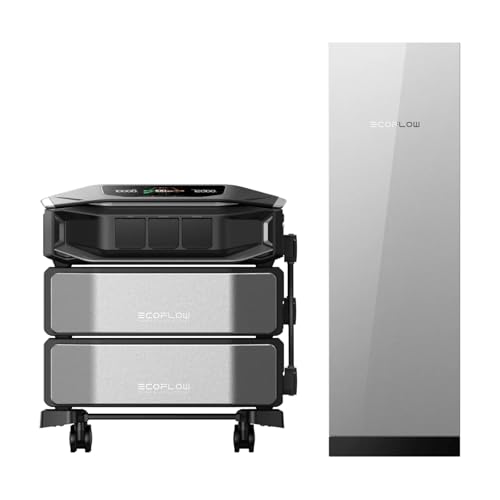
The EcoFlow listing in this comparison is a Delta Pro Ultra X system with a Smart Home Panel 3, even though the comparison name says Delta Pro 3. Treat the EcoFlow figures below as Delta Pro Ultra X figures, because that is what the EcoFlow listing states throughout. The Smart Home Panel 3 must be professionally installed before operation, and a licensed electrician should install it. That panel difference, plus the capacity difference, is the main reason these listings are not portable-versus-portable rivals in the usual sense.
Capacity and output
On capacity, the gap is large and it is stated clearly on each side. The DJI listing states a 1024Wh LFP battery, while the EcoFlow title states a 12288Wh power station, and the EcoFlow bullets describe an expandable capacity of 12-180 kWh. The listings state capacity in Wh figures and in kWh figures, and we report each figure as stated without converting between them. The EcoFlow listing also states that it is expandable to 180kWh, while the DJI listing states no expansion figure, so expansion is an EcoFlow-side feature in this pair, not a shared spec.
On output, the figures differ in the same direction. The DJI listing states a 2200W output, with the title calling it a stable output and the bullets calling it a max continuous output, while the EcoFlow title states a 12000W AC output at 240V, and the EcoFlow bullets describe an output range of 12-36 kW for the expanded system. The EcoFlow output figure is higher, but the EcoFlow system is a whole-home system with a panel, while the DJI unit is a portable station, so the output gap reflects system size as well.
Charging, noise and life
Charging, noise and life are where the DJI listing is far more specific. The DJI listing states a full recharge in 70 minutes on grid power and a solar recharge in 1.35 hours with up to 800W input, while the EcoFlow listing states no recharge time figure at all. The DJI listing states a noise level as low as 23 dB during recharging, while the EcoFlow listing describes quiet operation with no noise figure stated, so again only the DJI side gives a figure to compare.
On battery life, the same pattern holds. The DJI listing states up to 4000 cycles and a service life of approximately 10 years, while the EcoFlow listing states no cycle figure. The DJI listing also states 26 SGS product certifications, while the EcoFlow listing names no certification figure of that kind. Those gaps mean only that the EcoFlow listing leaves them unstated, and a buyer who wants those figures stated will find them only on the DJI side.
What the listings leave unclear
Warranty, by contrast, is clear on each side and it ties. The DJI listing states a five-year warranty by default, with its spec table giving an up to 5 years warranty description, while the EcoFlow spec table states a 5 year manufacturer warranty. Each listing therefore earns warranty points, and warranty does not separate them. The EcoFlow listing also states a transfer response of under 20 milliseconds when the grid fails, while the DJI listing states no switch time figure, so backup switching can be described with a figure only on the EcoFlow side.
Other gaps deserve a plain note. The EcoFlow listing gives no charging time, no cycle figure and no noise figure, and it names no Battery Management System feature, while the DJI listing names one with three stated protections. The DJI listing, in turn, gives no whole-home panel, no expansion figure and no switch time figure.
The kits we chose

DJI Power 1000
A DJI Power 1000 portable power station with a 1024Wh LFP battery, 2200W output, a full recharge in 70 minutes and a noise level as low as 23 dB during recharging.
Pros
- 1024Wh LFP battery with 2200W output stated
- Fully recharged in 70 minutes on grid power stated
- Noise level as low as 23 dB during recharging stated
- Battery Management System prevents over-current, over-voltage and over-discharge stated
Cons
- Solar and car charging need a separate compatible adapter, since those modules are not built in
- No whole-home panel included in this portable combo
- Service life is described as approximately 10 years, not as a fixed term
- No switch time figure stated
Detailed Review
The listing states a 1024Wh LFP battery, a 2200W output called a stable output in the title and a max continuous output in the bullets, a full recharge in 70 minutes on grid power, a solar recharge in 1.35 hours with up to 800W input, a noise level as low as 23 dB during recharging, up to 4000 cycles with a service life of approximately 10 years, a Battery Management System that prevents over-current, over-voltage and over-discharge, and 26 SGS product certifications. It includes the power station and an AC power cable, and it states a five-year warranty by default.
Who it's for: buyers who want a portable station with stated charging times, a stated noise figure and a stated cycle figure. Who should skip it: buyers who want a whole-home system with a panel, and buyers who want a stated switch time figure.
Its Solar Score of 9.7/10 comes from performance 29/35, build 21/25, value 21/25, safety 9/10 and warranty 3/5: 83 of 100 points, placed on our 9.2 to 9.8 scale.
Key Specifications
| Capacity | 1024Wh LFP battery |
|---|---|
| Output | 2200W |
| Charging | 70 minutes full recharge, 1.35 hours solar with up to 800W input |
| Noise | As low as 23 dB during recharging |
Figures as published on the retailer listing, collected 3 November 2026. Performance figures are manufacturer rated.
Safety and Warranty
What this listing states. Battery Management System prevents over-current, over-voltage and over-discharge, 26 SGS product certifications stated, so safety scores 9 of 10. 5 Years of Warranty. It does not say everything a buyer needs, such as who pays return shipping, so warranty scores 3 of 5. See How We Pick.
Power station limits. Stay within the stated continuous output and solar input limits, keep the unit ventilated and dry, charge within the stated temperature range, and never connect it to home wiring except through equipment a licensed electrician installs.
This is general buying information, not professional advice. Follow each product manual and local rules, and see our Safety Disclaimer.
EcoFlow Delta Pro Ultra X
A Delta Pro Ultra X system with a Smart Home Panel 3, a 12288Wh power station, 12000W AC output and expansion to 180kWh stated.
Pros
- 12288Wh power station with 12000W AC output stated
- Smart Home Panel 3 stated as part of the system
- Expandable to 180kWh stated
- 5 Year Manufacturer warranty stated
Cons
- Listing is a Delta Pro Ultra X system, not a Delta Pro 3 unit
- No recharge time figure stated
- No cycle figure stated
- No noise figure stated despite quiet description
Detailed Review
The listing states a Delta Pro Ultra X system with a Smart Home Panel 3, a 12288Wh power station, 12000W AC output at 240V, an output range of 12-36 kW and an expandable capacity of 12-180 kWh for the expanded system, a transfer response of under 20 milliseconds when the grid fails, auto-switchover for instant backup, and a 5 Year Manufacturer warranty in its spec table. It names Delta Pro Ultra X throughout, so its figures are Delta Pro Ultra X figures even though the comparison name says Delta Pro 3.
Who it's for: buyers who want a whole-home system with a panel, a much larger stated capacity and a stated output range for an expanded system. Who should skip it: buyers seeking a Delta Pro 3 unit specifically, and buyers who want stated charging, cycle and noise figures.
Its Solar Score of 9.7/10 comes from performance 33/35, build 20/25, value 21/25, safety 7/10 and warranty 3/5: 84 of 100 points, placed on our 9.2 to 9.8 scale.
Key Specifications
| Capacity | 12288Wh, expandable to 180kWh |
|---|---|
| Output | 12000W AC output, 240V |
| Expanded output | 12-36 kW stated for the expanded system |
| Transfer | Under 20 milliseconds when the grid fails |
Figures as published on the retailer listing, collected 3 November 2026. Performance figures are manufacturer rated.
Safety and Warranty
What this listing states. Auto-switchover for instant backup and storm prep stated, so safety scores 7 of 10. 5 Year Manufacturer. It does not say everything a buyer needs, such as who pays return shipping, so warranty scores 3 of 5. See How We Pick.
Power station limits. Stay within the stated continuous output and solar input limits, keep the unit ventilated and dry, charge within the stated temperature range, and never connect it to home wiring except through equipment a licensed electrician installs.
This is general buying information, not professional advice. Follow each product manual and local rules, and see our Safety Disclaimer.
As an Amazon Associate I earn from qualifying purchases.
Where the points went
The Solar Score weighs performance, build, value, safety and warranty. For power stations, safety means a named Battery Management System and stated certifications on the DJI side, and stated auto-switchover and storm prep on the EcoFlow side. Each listing states a 5 year warranty term, so each listing earns warranty points. How we pick explains the weights.
| Product | Solar Score | Perf. /35 | Build /25 | Value /25 | Safety /10 | Warranty /5 |
|---|---|---|---|---|---|---|
| DJI Power 1000 | 9.7 | 29 | 21 | 21 | 9 | 3 |
| EcoFlow Delta Pro Ultra X | 9.7 | 33 | 20 | 21 | 7 | 3 |
Scores start at 9.2 for the lowest totals and top out at 9.8. In between, a kit’s position follows its weighted points one to one in order.
Dji Power 1000 vs Ecoflow Delta Pro 3: Which Should You Choose?
Choose the EcoFlow listing if you want a whole-home system with a Smart Home Panel 3, a stated 12288Wh capacity, a stated 12000W AC output and expansion to 180kWh. Choose the DJI listing if you want a portable station with a stated full recharge in 70 minutes, a stated solar recharge in 1.35 hours with up to 800W input, a stated noise level as low as 23 dB during recharging, and a stated cycle figure of up to 4000 cycles. For wider reading, see the DJI Power 1000 vs EcoFlow Delta 3 comparison and the best solar panel for DJI Power 1000 guide, which cover nearby station choices.
| If you need | Look at |
|---|---|
| A whole-home system with a panel | EcoFlow Delta Pro Ultra X, with Smart Home Panel 3 |
| A portable station with stated charging times | DJI Power 1000, fully recharged in 70 minutes on grid power |
| A stated noise figure | DJI Power 1000, as low as 23 dB during recharging |
| Expansion to 180kWh stated | EcoFlow Delta Pro Ultra X |
Sizing Notes
- Match the stated capacity to the loads you plan to run, using 1024Wh on the DJI side and 12288Wh on the EcoFlow side.
- Match the stated output watts to the appliances you plan to run, using 2200W on the DJI side and 12000W AC output on the EcoFlow side.
- Match the DJI solar input to the stated limit of up to 800W input, and note that solar charging for the DJI unit needs a separate compatible adapter.
- Check the stated dimensions against the spot where the station will sit, using the spec table dimensions each listing states.
FAQ: power away from the grid
Is the EcoFlow listing a Delta Pro 3?
No. The EcoFlow listing in this comparison is a Delta Pro Ultra X system with a Smart Home Panel 3, and its figures should be read as Delta Pro Ultra X figures.
Do the listings state the same capacity?
No. The DJI listing states a 1024Wh battery, while the EcoFlow title states a 12288Wh power station, with expansion to 180kWh stated for the EcoFlow system.
Which listing states a full recharge time?
Only the DJI listing states one: a full recharge in 70 minutes on grid power, plus a solar recharge in 1.35 hours with up to 800W input. The EcoFlow listing states no recharge time figure.
Which listing states a noise figure?
Only the DJI listing states one: a noise level as low as 23 dB during recharging. The EcoFlow listing describes quiet operation with no noise figure stated.
Do the listings state a warranty term?
Yes, each listing states a 5 year term: the DJI listing states a five-year warranty by default, and the EcoFlow spec table states a 5 year manufacturer warranty.
Related solar guides
See every Power Stations and Generators guide.
More picks: best power station for cabin, best solar generator for full time RV living, and best portable power station for road trip.