On this page
The lights go out at dinner, the fridge falls silent, and the backup plan suddenly matters more than the sales page did: jackery homepower 3600 plus vs bluetti ac500. The short verdict is plain. Pick the Jackery example for a standalone station that plugs in and runs, and pick the BLUETTI kit only when the matching station set is already in place and a licensed electrician can install the link. The rest of this comparison shows why that split follows from what each listing actually states.
SolarKitHQ earns a commission when you buy through links on this page, at no extra cost to you. As an Amazon Associate I earn from qualifying purchases. Affiliate disclosure.
Side by side
| Power station | Solar Score | Output stated | Capacity stated | Voltage stated | Charging or install stated |
|---|---|---|---|---|---|
| Jackery HomePower 3600 Plus | 9.6/10 | 3600W | 3584Wh | 120V and 240V in parallel | Hybrid AC+DC in 2 hours |
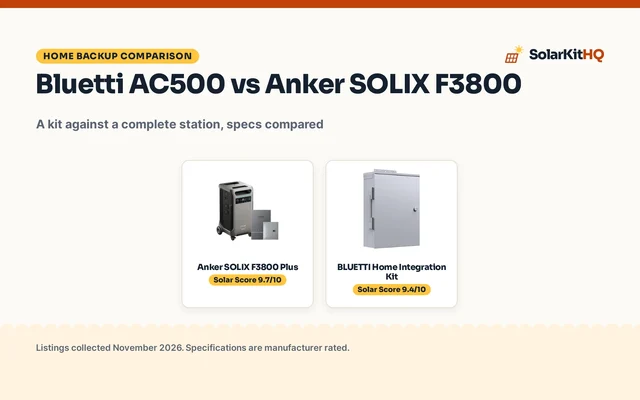
| BLUETTI Home Integration Kit | 9.3/10 | 5000W system | 6144Wh system | 120V | Licensed electrician install |
We copied each rating from the seller’s listing as the brand states it; data date 4 November 2026.
What each listing actually is
The Jackery listing describes a portable power station with 3600W AC output, 3584Wh capacity, and LFP battery chemistry, plus wheels and a telescopic handle for moving it. The BLUETTI listing describes a home integration kit, not a station: it connects an AC500 and B300S set into a home backup system rated up to 6144Wh, 120V and 5000W. Readers who compare the watt figures alone will miss that gap, because the BLUETTI figures describe the finished system, while the Jackery figures describe the station itself.
That distinction shapes every other section here. The Jackery example can stand alone as home backup, while the BLUETTI kit only makes sense alongside the matching set, with install by a licensed electrician. Neither listing states a concrete warranty term, so warranty does not separate them, and both listings leave key figures unclear, as the later section shows.
Output and capacity
On output, the Jackery listing states 3600W, rising to 7200W in parallel, with dual voltage at 120V and 240V in parallel. It names pumps, heaters and dryers as loads the station can run. The BLUETTI listing states a finished system up to 5000W at 120V, with no dual voltage figure stated for the kit. Because the BLUETTI figure belongs to the AC500 and B300S system, not to the kit alone, this comparison does not crown a watt winner: the figures describe different things.
On capacity, the Jackery listing states 3584Wh in the bullets, expandable to 21kWh per unit and to 43kWh with multiple units, while the title states 7168Wh. That title figure conflicts with the bullet figure, so this article compares on the bullet figure and flags the conflict in the review. The BLUETTI listing states a system capacity up to 6144Wh for the AC500 and B300S set. Again, the capacities are not like for like, since the Jackery capacity belongs to the station and the BLUETTI capacity belongs to the finished system.
Charging and install
The Jackery listing states 4 ways to charge: hybrid AC+DC in 2 hours, AC in 2.5 hours, solar in 4 hours, and a gas generator in 2.5 hours, each for a full recharge from 0 to 100 percent as the listing phrases it.
The BLUETTI listing gives no recharge time for the kit itself, and it states that only a licensed electrician can install the UPS power system. That install condition is a real planning factor, even though no price is stated here: the kit is a link between a station set and a home backup system, not a plug-in station. The Jackery listing, by contrast, describes a plug-and-play design with no complex install described.
Size and moving it
The Jackery listing states 77.2 pounds and dimensions of 15.2 inches by 12.2 inches by 19.3 inches, with a luggage-style design, wheels and a telescopic handle. That weight is a planning fact, not a reason to dismiss the station: the listing presents it as a rolling unit for moving from room to room, in the listing’s own examples from kitchen to garage.
The BLUETTI listing gives no weight for the kit, and its spec table lists 3.2 inches by 0.2 inches by 0.2 inches. Those dimensions do not describe a full backup system, so the listing leaves the kit’s overall size unclear. On size alone, only the Jackery example gives a usable station size, and that gap is a listing gap, not a win for either side.
What the listings leave unclear
Beyond the Jackery capacity conflict and the BLUETTI size gap, both listings leave warranty terms unclear. The Jackery spec table gives a warranty description of 1 with no unit attached, so no concrete term can be quoted from it. The BLUETTI listing states no warranty term at all. The Jackery listing also states that the station and solar panels ship separately and may arrive in separate packages, which matters for anyone planning around a delivery date.
The examples
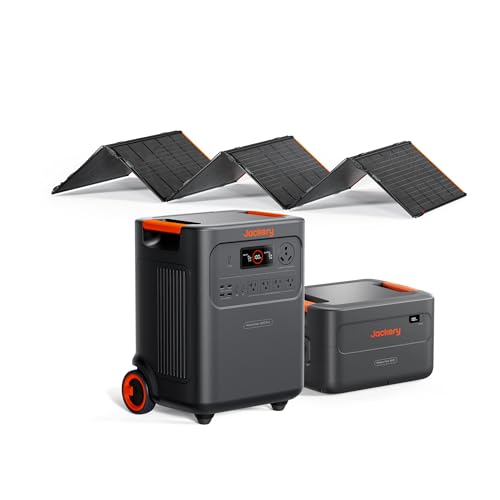
Jackery HomePower 3600 Plus
A portable power station with 3600W AC output, 3584Wh capacity expandable to 21kWh, and wheels and a telescopic handle for moving it.
Pros
- 3600W AC output, rising to 7200W in parallel, per the listing
- 3584Wh capacity expandable to 21kWh per unit, per the listing
- Recharges from 0 to 100 percent in 2 hours via hybrid AC+DC, per the listing
- Ceramic membrane cells stated to prevent thermal runaway from heat or overcharge
Cons
- Warranty description gives 1 with no unit, so no concrete warranty term can be quoted
- Solar panels ship separately and may arrive in separate packages, per the listing
- 77.2 pounds, so moving it relies on its wheels and telescopic handle
Detailed Review
The listing states a portable power station with 3600W AC output, 7200W in parallel, dual voltage at 120V and 240V in parallel, 3584Wh capacity expandable to 21kWh per unit and to 43kWh with multiple units, 6,000 cycles and a 10-year lifespan, and 4 charging routes with hybrid AC+DC recharge in 2 hours. It also states that the station can power a 3-person household for over 2 weeks, and that the station and solar panels ship separately and may arrive in separate packages. The title states 7168Wh, which conflicts with the bullet figure of 3584Wh, so compare on the bullet figure.
Who it's for: homeowners who want a standalone station for pumps, heaters and dryers during an outage, with rolling movement between rooms. Who should skip it: anyone who wants a complete system in a single delivery, since the station and solar panels ship separately, or anyone who needs a concrete warranty term, since none is quoted here.
Its Solar Score of 9.6/10 comes from performance 30/35, build 21/25, value 21/25, safety 7/10 and warranty 0/5: 79 of 100 points, placed on our 9.2 to 9.8 scale.
Key Specifications
| AC output | 3600W |
|---|---|
| Capacity | 3584Wh |
| Expansion | 21kWh per unit |
| Recharge | Hybrid AC+DC in 2 hours |
Figures as published on the retailer listing, collected 4 November 2026. Performance figures are manufacturer rated.
Safety and Warranty
What this listing states. Ceramic membrane cells stated to prevent thermal runaway from heat or overcharge, so safety scores 7 of 10. No warranty term, so warranty scores zero. See How We Pick.
Power station limits. Stay within the stated continuous output and solar input limits, keep the unit ventilated and dry, charge within the stated temperature range, and never connect it to home wiring except through equipment a licensed electrician installs.
This is general buying information, not professional advice. Follow each product manual and local rules, and see our Safety Disclaimer.
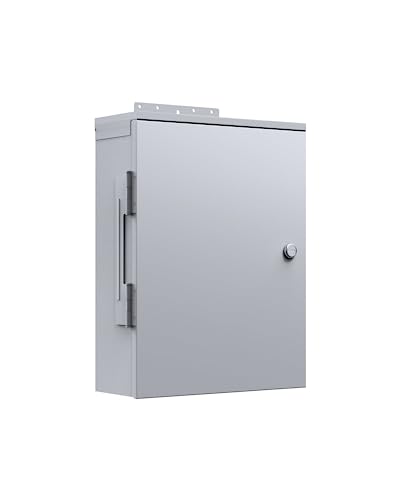
BLUETTI Home Integration Kit
A kit that connects an AC500 and B300S set to a home backup system rated up to 6144Wh, 120V and 5000W.
Pros
- Builds a home backup system rated up to 6144Wh, 120V and 5000W from an AC500 and B300S set, per the listing
- Provides 24/7 UPS home backup when linked to a home backup system, per the listing
- Includes a 50A outlet box, a sub-panel with a 50A inlet, and charging and connection cables, per the listing
- Works with the 100-120V US plug version, per the listing
Cons
- It is a kit, not a standalone power station, so it needs an AC500 and B300S set to work
- Only a licensed electrician can install the UPS power system, per the listing
- No weight, battery chemistry, or recharge time is stated for the kit itself
- No warranty term is stated
Detailed Review
The listing states a home integration kit that connects an AC500 and B300S set into a home backup system rated up to 6144Wh, 120V and 5000W, with 24/7 UPS home backup and install by a licensed electrician only, for the 100-120V US plug version. The box includes a 50A outlet box, a sub-panel with a 50A inlet, a 50A AC charging cable, and a connection cable. The spec table lists 3.2 inches by 0.2 inches by 0.2 inches, which does not describe a full backup system, so the kit's overall size is left unclear.
Who it's for: owners of an AC500 and B300S set who want a home backup link installed by a licensed electrician. Who should skip it: anyone looking for a standalone power station, since this listing is a kit, not a station.
Its Solar Score of 9.3/10 comes from performance 23/35, build 18/25, value 18/25, safety 0/10 and warranty 0/5: 59 of 100 points, placed on our 9.2 to 9.8 scale.
Key Specifications
| System capacity | 6144Wh |
|---|---|
| System voltage | 120V |
| System power | 5000W |
| Plug version | 100-120V US |
Figures as published on the retailer listing, collected 4 November 2026. Performance figures are manufacturer rated.
Safety and Warranty
What this listing states. No UL, FCC or battery management statement is stated, so safety scores zero. No warranty term, so warranty scores zero. See How We Pick.
Power station limits. Stay within the stated continuous output and solar input limits, keep the unit ventilated and dry, charge within the stated temperature range, and never connect it to home wiring except through equipment a licensed electrician installs.
This is general buying information, not professional advice. Follow each product manual and local rules, and see our Safety Disclaimer.
As an Amazon Associate I earn from qualifying purchases.
Where the points went
The Solar Score weighs performance, build, value, safety and warranty. For home backup stations, safety means stated protection against heat or overcharge, or another protection the listing names: the Jackery listing names ceramic membrane cells stated to prevent thermal runaway from heat or overcharge, while the BLUETTI kit listing names no such protection for the kit itself. Neither listing states a concrete warranty term, so warranty adds nothing to either score here. How we pick explains the weights.
| Product | Solar Score | Perf. /35 | Build /25 | Value /25 | Safety /10 | Warranty /5 |
|---|---|---|---|---|---|---|
| Jackery HomePower 3600 Plus | 9.6 | 30 | 21 | 21 | 7 | 0 |
| BLUETTI Home Integration Kit | 9.3 | 23 | 18 | 18 | 0 | 0 |
We place weighted points on a scale whose ends are 9.2 and 9.8. Because the mapping is straight, a unit with more points never shows less.
How to choose the best jackery homepower 3600 plus vs bluetti ac500
Choose the Jackery example for a standalone station
Choose the Jackery example when the goal is a station that runs on its own, with 3600W output, 3584Wh capacity, and 4 charging routes. The wheels and telescopic handle suit moving it between rooms, and the dual voltage at 120V and 240V in parallel suits loads that need the higher voltage figure the listing states. See solar generator vs gas generator home backup for the wider home backup comparison.
Choose the BLUETTI kit only with the matching set
Choose the BLUETTI kit only when an AC500 and B300S set is already in place, since the kit listing names no battery of its own. Plan for install by a licensed electrician, and check that the set matches the 100-120V US plug version the listing names. See best home backup power station for hurricane for another home backup angle.
Match output, capacity and voltage to the loads
Match the stated output and capacity to the loads in the listing: pumps, heaters and dryers for the Jackery example, and the finished system figures of 5000W and 6144Wh at 120V for the BLUETTI system. Do not borrow a figure from the other listing when a load needs a figure the listing leaves unclear; treat that gap as a reason to ask the maker, not as a win for either side.
| If you need | Look at |
|---|---|
| Standalone station | Jackery HomePower 3600 Plus, 3600W output |
| Home link for an AC500 and B300S set | BLUETTI Home Integration Kit, 5000W system |
| Dual voltage in parallel | Jackery HomePower 3600 Plus, 120V and 240V |
| System at 120V | BLUETTI Home Integration Kit, 120V system |
Sizing Notes
- Match the Jackery 3600W output and 3584Wh capacity to the loads you plan, using pumps, heaters and dryers as the listing’s examples.
- Match the BLUETTI system figures of 5000W, 6144Wh and 120V to the finished AC500 and B300S system, not to the kit alone.
- For expansion, note the Jackery capacity expands to 21kWh per unit and to 43kWh with multiple units, per the listing.
- For recharge planning, note the Jackery hybrid AC+DC recharge in 2 hours, AC in 2.5 hours, and solar in 4 hours, per the listing.
FAQ: power away from the grid
Can the Jackery HomePower 3600 Plus run a home during an outage?
The listing states 3600W output, rising to 7200W in parallel, and names pumps, heaters and dryers as loads. It also states 3584Wh capacity, expandable to 21kWh per unit, so the fit depends on the loads in a given home, which the listing does not size for you.
Is the BLUETTI listing a complete power station?
No. The listing describes a home integration kit that connects an AC500 and B300S set into a system rated up to 6144Wh, 120V and 5000W. It names no battery of its own, and only a licensed electrician can install the UPS power system.
Which listing states dual voltage?
The Jackery listing states dual voltage at 120V and 240V in parallel. The BLUETTI listing states a system voltage of 120V, with no dual voltage figure stated.
What warranty term does each listing state?
Neither listing states a concrete warranty term. The Jackery spec table gives a warranty description of 1 with no unit, and the BLUETTI listing states no warranty term.
Related solar guides
See every Home Backup Power Stations guide and all Power Stations and Generators guides.
More picks: portable power station vs propane generator, solar generator vs home battery backup, power station vs gas generator for sump pump, best portable power station for cold weather.