On this page
The lights go out at dinner time in a tiny house, and the fridge, the phones and the laptop all look to the same small box on the porch, which is why the best solar generator for tiny house living has to fit the space, the loads and the sun the roof actually gets. We compared solar generators for tiny house living on capacity, AC output, solar input, outlets and warranty, using only what each maker states. The largest station here holds far more than the smallest, and the panels in the box range from a small built-in panel to large panels, so the right pick depends on what the house actually runs.
SolarKitHQ earns a commission when you buy through links on this page, at no extra cost to you. As an Amazon Associate I earn from qualifying purchases. Affiliate disclosure.
Quick picks
 Best Overall Storbeaonbk P5000 Plus: Largest capacity here with 400W panels in the box Check price on Amazon
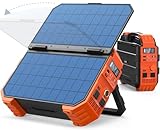 Best Panel Included BLAVOR S1600 Solar Generator: Built-in 40W panel plus up to 200W external solar input Check price on Amazon
 Best Portable GRECELL 330W Power Station: Lightest pick here with a folding handle and wireless charging Check price on Amazon
 High AC Output OUPES Mega 1 Solar Generator: 2000W AC output with a 100W panel and a 1024Wh battery Check price on Amazon
 Smallest Kit MARBERO 237Wh Solar Kit: A 237Wh kit with a 60W panel for the lightest loads Check price on Amazon
The kits we chose
| # | Product | Solar Score | Buy |
|---|---|---|---|
| 1 | Storbeaonbk P5000 Plus | 9.7/10 | Buy on Amazon |
| 2 | OUPES Mega 1 Solar Generator | 9.7/10 | Buy on Amazon |
| 3 | BLAVOR S1600 Solar Generator | 9.6/10 | Buy on Amazon |
| 4 | MARBERO 237Wh Solar Kit | 9.6/10 | Buy on Amazon |
| 5 | GRECELL 330W Power Station | 9.5/10 | Buy on Amazon |

Storbeaonbk P5000 Plus
A 5120Wh station with 3600W AC output, 2 x 400W panels, 15 outlets and a UPS function for home backup.
Pros
- Largest capacity here at 5120Wh, with 3600W AC output
- 400W solar panels included in the box
- 15 outlets, including 5 AC outlets, 4 USB-A and 2 USB-C ports
- UPS function guards desktop PCs and file servers when the grid fails
Cons
- Heaviest pick here at 120.0 pounds
- Largest footprint here at 21.6 by 11.8 by 19.2 inches
- The 5-hour solar recharge needs the 400W panels in series
- Battery capacity is rated to 70% after 6000 cycles
Detailed Review
The listing states a 5120Wh LiFePO4 station with 3600W AC output and 6000W surge, 120V/240V output, 2 x 400W solar panels, 1000W MPPT solar input and 15 outlets: 5 AC outlets, 4 USB-A ports, 2 USB-C ports, 2 DC ports, 1 cigarette lighter and 1 airline socket. It recharges in 2.8 hours from an 1800W wall outlet or in 5 hours with the 2 x 400W panels in series, at up to 23% solar conversion efficiency, and the battery is rated for 6000 cycles to 70% over about 10 years. The battery management system manages voltage and temperature to avoid high temperatures and overcharging, and the UPS function guards desktop PCs and file servers when the grid fails. It weighs 120.0 pounds and measures 21.6 by 11.8 by 19.2 inches, with a 5-year warranty.
Who it's for: tiny house owners who want the largest capacity here, with panels included and a UPS function for sensitive devices. Who should skip it: anyone short on floor space, since it is the heaviest and largest pick here, and anyone who wants a station to carry by hand.
Its Solar Score of 9.7/10 comes from performance 33/35, build 22/25, value 21/25, safety 7/10 and warranty 4/5: 87 of 100 points, placed on our 9.2 to 9.8 scale.
Key Specifications
| Capacity | 5120Wh |
|---|---|
| AC output | 3600W, 6000W surge |
| Solar | 2 x 400W panels, 1000W MPPT |
| Weight | 120.0 lb |
Taken from the seller's listing on 19 November 2026. Capacity and output figures are rated by the manufacturer.
Safety and Warranty
What this listing states. Battery management system manages voltage and temperature to avoid high temperatures and overcharging, so safety scores 7 of 10. 5-year warranty stated. It does not say everything a buyer needs, such as who pays return shipping, so warranty scores 4 of 5. See How We Pick.
Power station limits. Stay within the stated continuous output and solar input limits, keep the unit ventilated and dry, charge within the stated temperature range, and never connect it to home wiring except through equipment a licensed electrician installs.
This is general buying information, not professional advice. Follow each product manual and local rules, and see our Safety Disclaimer.

OUPES Mega 1 Solar Generator
A 2000W, 1024Wh LiFePO4 station with a 100W panel in the box, 13 ports, app control and a stated 5-year warranty, expandable to 5120Wh with two B2 extra batteries.
Pros
- Stated 5-year warranty, the only concrete warranty term in this group
- 1024Wh expands to 5120Wh with two B2 extra batteries
- 2000W continuous AC with a 4500W surge for motor startups
- 13 ports, including four 120V AC outlets, 100W PD USB-C and a car socket
Cons
- The 100W panel in the box is well under the stated 800W max solar input
- Expansion needs the B2 extra batteries bought separately
- Panel dimensions are not stated, only the 100W figure
Detailed Review
The listing states 2000W of pure sine wave AC output with a 4500W surge, a 1024Wh LiFePO4 battery expandable to 5120Wh with two B2 extra batteries, and a 100W solar panel in the box against a stated 800W maximum solar input. It lists 36 minutes to 80 percent on AC, or 26 minutes with AC and solar together, a built-in MPPT controller, 13 ports including four 120V AC outlets and 100W PD USB-C, app control over Bluetooth and Wi-Fi, a UPS mode under 20 milliseconds and a 5-year warranty. The spec table's 'Runtime' entry of 36 minutes matches the title's 0 to 80 percent charge claim rather than any run time, so trust the title and bullets for charging.
Who it's for: outage backup for a freezer where a stated warranty and an expansion path matter. Who should skip it: buyers who want more than the included 100W panel on day one.
Its Solar Score of 9.7/10 comes from performance 32/35, build 21/25, value 21/25, safety 8/10 and warranty 4/5: 86 of 100 points, placed on our 9.2 to 9.8 scale.
Key Specifications
| Capacity | 1024Wh, expandable to 5120Wh |
|---|---|
| AC output | 2000W continuous, 4500W surge |
| Solar | 100W panel included, 800W max input |
| Ports | 13, including 4 AC outlets and 100W USB-C |
Figures as published on the retailer listing, collected 20 October 2026. Performance figures are manufacturer rated.
Safety and Warranty
What this listing states. LiFePO4 cells with 3500+ life cycles, under-20ms UPS and pure sine wave AC output stated, so safety scores 8 of 10. 5-year warranty stated. It does not say everything a buyer needs, such as who pays return shipping, so warranty scores 4 of 5. See How We Pick.
Power station limits. Stay within the stated continuous output and solar input limits, keep the unit ventilated and dry, charge within the stated temperature range, and never connect it to home wiring except through equipment a licensed electrician installs.
This is general buying information, not professional advice. Follow each product manual and local rules, and see our Safety Disclaimer.

BLAVOR S1600 Solar Generator
A 1024Wh LiFePO4 station with 1600W output, a built-in 40W panel and a 100W USB-C port.
Pros
- Built-in 40W panel unfolds to collect sunlight with no separate panel to carry
- 1600W rated output with 3200W peak for refrigerators, coffee makers and CPAP machines
- LiFePO4 battery rated for more than 3,500 charge cycles
- Eight output ports, including a bidirectional 100W USB-C port
Cons
- Built-in panel is only 40W, so faster charging needs an external panel
- External panel is sold separately
- 26.0 pounds, heavier than the smallest station here
- External solar input is capped at 200W
Detailed Review
The listing states a 1024Wh LiFePO4 station with 1600W rated output and 3200W peak power, a built-in 40W solar panel that unfolds to collect sunlight, up to 200W of external solar input, eight output ports and a bidirectional 100W USB-C port. The battery is rated for more than 3,500 charge cycles, and the smart BMS guards against overheating, overload and short circuit. It recharges from a wall outlet, a car socket, the built-in 40W panel or a compatible external panel, and the LCD shows input, output and remaining battery. The package includes the S1600 station, a DC cord, a car cable, a carrying case, 10 adapter connectors and a user manual, with a 3-year warranty. It weighs 26.0 pounds and measures 5.6 by 13.3 by 17.2 inches.
Who it's for: tiny house owners who want a panel in the box and 1600W of output for refrigerators, coffee makers and CPAP machines. Who should skip it: anyone who wants fast solar charging from the built-in panel alone, since it is only 40W.
Its Solar Score of 9.6/10 comes from performance 30/35, build 21/25, value 21/25, safety 5/10 and warranty 3/5: 80 of 100 points, placed on our 9.2 to 9.8 scale.
Key Specifications
| Capacity | 1024Wh |
|---|---|
| AC output | 1600W, 3200W peak |
| Solar | 40W built-in, up to 200W external |
| Weight | 26.0 lb |
Taken from the seller's listing on 19 November 2026. Capacity and output figures are rated by the manufacturer.
Safety and Warranty
What this listing states. Smart BMS guards against overheating, overload and short circuit, so safety scores 5 of 10. 3-year warranty stated. It does not say everything a buyer needs, such as who pays return shipping, so warranty scores 3 of 5. See How We Pick.
Power station limits. Stay within the stated continuous output and solar input limits, keep the unit ventilated and dry, charge within the stated temperature range, and never connect it to home wiring except through equipment a licensed electrician installs.
This is general buying information, not professional advice. Follow each product manual and local rules, and see our Safety Disclaimer.

MARBERO 237Wh Solar Kit
A MARBERO 237Wh solar generator kit with a 60W panel, 300W pure sine wave output and a 12-month warranty.
Pros
- 237Wh with 60W panel included stated
- 300W pure sine wave AC outlets stated
- 21.5-23.5% panel conversion stated
- 12 months warranty stated
Cons
- 237Wh against 1024Wh on the BLUETTI
- 300W limit with no heating elements per the listing
- 60W panel recharges slowly per the stated size
- 9-pound stated weight against lighter small stations
Detailed Review
The listing states a 237Wh portable power station kit with a 60W foldable solar panel at 21.5 to 23.5% conversion, two 300W pure sine wave AC outlets with 375W peak, USB-A QC3.0, USB-A, USB-C PD and DC outputs, a 3-mode LED flashlight, and a smart chip that recognizes devices with overcharging and overloading protection. It states a 9-pound station, 12 by 10 by 16 inches, and a 12 months warranty with round-the-clock customer service. The listing warns against devices over 300W, especially heating elements.
Who it's for: boondockers who want a complete kit at a carryable weight. Who should skip it: anyone who needs 1000Wh or more.
Its Solar Score of 9.6/10 comes from performance 29/35, build 20/25, value 21/25, safety 5/10 and warranty 3/5: 78 of 100 points, placed on our 9.2 to 9.8 scale.
Key Specifications
| Capacity | 237Wh |
|---|---|
| AC output | 300W |
| Panel | 60W included |
| Weight | 9 lb |
Figures as published on the retailer listing, collected 20 October 2026. Performance figures are manufacturer rated.
Safety and Warranty
What this listing states. smart chip with overcharging and overloading protection stated, so safety scores 5 of 10. 12 months warranty stated. It does not say everything a buyer needs, such as who pays return shipping, so warranty scores 3 of 5. See How We Pick.
Power station limits. Stay within the stated continuous output and solar input limits, keep the unit ventilated and dry, charge within the stated temperature range, and never connect it to home wiring except through equipment a licensed electrician installs.
This is general buying information, not professional advice. Follow each product manual and local rules, and see our Safety Disclaimer.

GRECELL 330W Power Station
A 288.6Wh station with 330W output, a 60W USB-C port and a 5W wireless charger, at 7.94 pounds.
Pros
- Lightest station here at 7.94 pounds, with a folding handle
- 60W USB-C port fast-charges laptops and tablets
- 5W wireless charger for Qi-enabled devices
- FCC certified with overload, over-temperature and short-circuit protection
Cons
- Smallest capacity here at 288.6Wh
- Solar panel is not included
- Rated for devices up to 300W, below its 330W output
- Car charging takes 7 to 9 hours
Detailed Review
The listing states a 288.6Wh station with 330W rated AC output and 600W peak surge, built on an 11.1V 26Ah lithium battery, with a PD 60W USB-C port, QC3.0 18W USB-A and a 5W wireless charger. It runs devices up to 300W, powers a mini fridge for 6 hours and a CPAP machine for 16 hours, and recharges a laptop 6 times or a smartphone 25 or more times. Recharging takes 6 to 7 hours from the AC adapter, 7 to 9 hours from a 12V car charger or 5 to 9 hours from a 60W to 120W solar panel, which is not included. The listing states FCC certification, overload, over-temperature and short-circuit protection and an auto-cooling fan. The warranty term is given as 1 year in one place and 2 years in another, so check before ordering.
Who it's for: tiny house owners who want the lightest station here for short stays and small loads. Who should skip it: anyone who needs to run a fridge all day, since 288.6Wh is the smallest capacity here.
Its Solar Score of 9.5/10 comes from performance 28/35, build 20/25, value 20/25, safety 5/10 and warranty 2/5: 75 of 100 points, placed on our 9.2 to 9.8 scale.
Key Specifications
| Capacity | 288.6Wh |
|---|---|
| AC output | 330W, 600W peak |
| USB-C | 60W PD, 18W QC3.0 |
| Weight | 7.94 lb |
Taken from the seller's listing on 19 November 2026. Capacity and output figures are rated by the manufacturer.
Safety and Warranty
What this listing states. FCC certified with overload, over-temperature and short-circuit protection stated, so safety scores 5 of 10. 1-year warranty stated. It does not say everything a buyer needs, such as who pays return shipping, so warranty scores 2 of 5. See How We Pick.
Power station limits. Stay within the stated continuous output and solar input limits, keep the unit ventilated and dry, charge within the stated temperature range, and never connect it to home wiring except through equipment a licensed electrician installs.
This is general buying information, not professional advice. Follow each product manual and local rules, and see our Safety Disclaimer.
As an Amazon Associate I earn from qualifying purchases.
More picks to compare
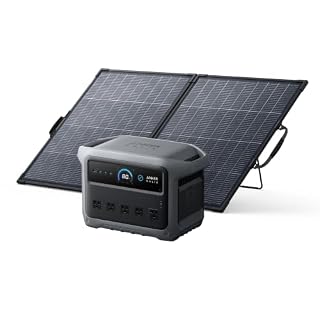 Anker SOLIX C1000 Gen 22,000W output with a 200W panel for home and outdoor use.Check on Amazon
Numbers side by side
| Station | Solar Score | Capacity | AC output | Solar input | Weight | Amazon |
|---|---|---|---|---|---|---|
| Storbeaonbk P5000 Plus | 9.7/10 | 5120Wh | 3600W | 2 x 400W panels | 120.0 lb | View on Amazon |
| BLAVOR S1600 Solar Generator | 9.6/10 | 1024Wh | 1600W | 40W built-in, up to 200W | 26.0 lb | View on Amazon |
| GRECELL 330W Power Station | 9.5/10 | 288.6Wh | 330W | 60-120W panel, not included | 7.94 lb | View on Amazon |
| OUPES Mega 1 Solar Generator | 9.7/10 | 1024Wh | 2000W | 100W panel | Not stated | View on Amazon |
| MARBERO 237Wh Solar Kit | 9.6/10 | 237Wh | Not stated | 60W panel | Not stated | View on Amazon |
Figures in this table are the manufacturer’s ratings as listed, captured 19 November 2026.
Where the points went
The Solar Score weighs performance, build, value, safety and warranty. For a solar generator, safety means a battery management system, stated protections and certifications the listing actually states; a station that states none scores zero on that line, whatever its watts. The Storbeaonbk, the BLAVOR and the GRECELL state warranty terms, and each of those also states safety features. How we pick explains the weights.
| Product | Solar Score | Perf. /35 | Build /25 | Value /25 | Safety /10 | Warranty /5 |
|---|---|---|---|---|---|---|
| Storbeaonbk P5000 Plus | 9.7 | 33 | 22 | 21 | 7 | 4 |
| BLAVOR S1600 Solar Generator | 9.6 | 30 | 21 | 21 | 5 | 3 |
| GRECELL 330W Power Station | 9.5 | 28 | 20 | 20 | 5 | 2 |
The Solar Score runs on a 9.2 minimum and a 9.8 maximum, and the weighted point total is placed on that line in proportion, so more points can only raise it.
How to choose the best solar generator for tiny house
Start from capacity, not watts
Capacity sets how long the lights stay on. The stations here run from 237Wh to 5120Wh, so a 237Wh kit suits light loads while a 5120Wh station covers a fridge, a laptop and phones together. Match the watt-hours to the loads the house runs most, and see the best 1000Wh power station for tiny house guide for the middle of the range.
Check the AC output against the biggest load
AC output sets what can run at once. The stations here run from 330W to 3600W, with peaks up to 6000W, so a 330W station suits small devices while a 3600W station runs larger loads. The OUPES Mega 1 gives 2000W of AC output with a 1024Wh battery, and the BLAVOR gives 1600W with a 3200W peak. Compare the output with the loads before ordering, and see 1000 watt vs 2000 watt solar generator for the step between sizes.
| Station | Capacity | AC output |
|---|---|---|
| Storbeaonbk P5000 Plus | 5120Wh | 3600W |
| BLAVOR S1600 Solar Generator | 1024Wh | 1600W |
| GRECELL 330W Power Station | 288.6Wh | 330W |
| OUPES Mega 1 Solar Generator | 1024Wh | 2000W |
| MARBERO 237Wh Solar Kit | 237Wh | Not stated |
Count the panel in the box
All but the GRECELL include a panel: the Storbeaonbk ships with 2 x 400W panels, the OUPES with a 100W panel, the MARBERO with a 60W panel and the BLAVOR with a built-in 40W panel plus up to 200W of external solar input. The GRECELL ships with no panel, and its solar input takes a 60W to 120W panel. A panel in the box means the station can recharge from the sun on day one.
Read the warranty and the protections
The Storbeaonbk states a 5-year warranty, the BLAVOR a 3-year warranty and the GRECELL a 1-year warranty. The BLAVOR and the Storbeaonbk state a battery management system, and the GRECELL states FCC certification with overload, over-temperature and short-circuit protection. The OUPES and the MARBERO state no warranty term and no safety feature, so they score zero on both lines. See the LiFePO4 battery guides for the battery side.
Sizing Notes
- Match panel watts to the station’s solar input: the BLAVOR takes up to 200W of external solar, and the GRECELL takes a 60W to 120W panel.
- Match watt-hours to the loads: the stations here run from 237Wh to 5120Wh.
- Check the outlets against the devices: the Storbeaonbk has 15 outlets, and the BLAVOR has eight output ports.
- Check the station’s weight and size against the space: the Storbeaonbk weighs 120.0 pounds, and the GRECELL weighs 7.94 pounds.
FAQ: power away from the grid
What size solar generator does a tiny house need?
The stations here run from 237Wh to 5120Wh. A 237Wh kit suits light loads, a 1024Wh station suits a fridge, a laptop and phones, and a 5120Wh station covers the largest loads in this roundup.
Can a solar generator run a fridge in a tiny house?
The BLAVOR is rated at 1600W for refrigerators, coffee makers, CPAP machines and laptops, and the GRECELL powers a mini fridge for 6 hours. Check the fridge against the station’s rated output before ordering.
How long does it take to recharge a solar generator with panels?
The Storbeaonbk recharges in 5 hours with its 2 x 400W panels in series, and the GRECELL recharges in 5 to 9 hours from a 60W to 120W panel. The BLAVOR recharges from its built-in 40W panel or an external panel up to 200W.
Which stations here include a solar panel?
All but the GRECELL: the Storbeaonbk includes 2 x 400W panels, the OUPES includes a 100W panel, the MARBERO includes a 60W panel and the BLAVOR has a built-in 40W panel. The GRECELL ships with no panel.
Do any of these stations have a UPS function?
The Storbeaonbk has a UPS function that guards desktop PCs and file servers when the grid fails. The other stations state no UPS function.
Related solar guides
See every Solar Generators guide and all Power Stations and Generators guides. Also see our best 1000Wh power station for tiny house. Also see our best 2000Wh power station for tiny house. Also see our best 200 watt solar panel for tiny house. Also see our best 100 watt solar panel for tiny house. Also see our best 300 watt solar panel for tiny house. Also see our best charge controller for tiny house. Also see our 120v vs 240v power station.
More picks: 2000Wh stations for tiny houses, portable stations for camping and 1000 watt vs 2000 watt solar generators.